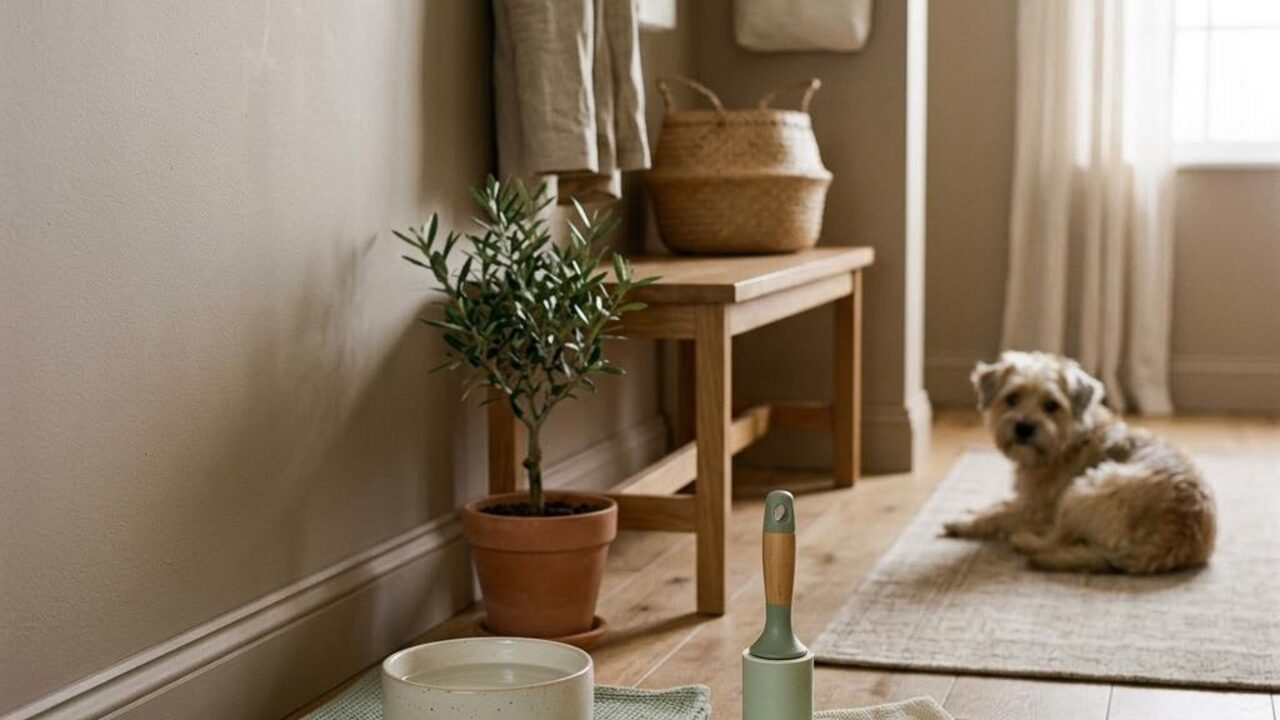
A new pet changes the rhythm of a home. Fur appears in new places, the feeding area needs regular attention, and an accident can move cleaning to the top of the list without warning. The answer is a few clearly timed tasks, not an attempt to keep every surface perfect all day.
This is a household organization plan, not veterinary guidance. For health questions, product safety, or anything unusual with a pet, follow advice from a qualified professional and the product instructions.
Separate daily resets from occasional work
Start with the tasks that protect everyday comfort:
- Clear and wipe the feeding area
- Sweep or vacuum the most-used path
- Check the place where supplies are stored
- Replace or launder a used mat when needed
- Record an accident response without delaying it
Then add weekly or less frequent work, such as washing bedding, checking hair on soft furnishings, or cleaning a less-used area. A task belongs on the schedule only when its frequency is clear.
Make accident response simple
Keep the supplies you already use according to their labels in an easy-to-reach place. Write a short sequence for the household: move people and pets safely, remove what needs removing, clean according to the product directions, and wash hands or dispose of materials appropriately. Do not mix products or add unverified remedies.
The sequence should be short enough that someone else can follow it without asking where everything lives. If a surface or situation needs specialist attention, stop and get appropriate advice.
A pet-friendly cleaning plan should reduce uncertainty, not create a second set of rules to memorize.
Put fur and feeding on a cadence
Notice where fur collects most and make those locations the priority instead of cleaning every room equally. A small recurring task in the right room is more useful than a whole-home task that is always postponed.
Keep food and water area tasks tied to an existing action, such as the first meal or evening reset. Add supply checks to the grocery or household list when food, litter, or cleaning materials are running low. Lucru Home cleaning tasks can be recurring, assigned to rooms, and marked due as the household works through them.
Revisit the routine after two weeks
The first plan will be based on guesses. After two weeks, remove work that is not helping, move tasks to the times they actually happen, and add only the gap you can see. Keep one flexible task for the weeks when the pet or household needs more attention.
The pet home cleaning routine guide covers the broader rhythm, while cleaning between deep cleans can help keep everyday tasks from growing into a backlog. Keep the cadence in the Lucru Home cleaning schedule.
A new pet brings enough change on its own. Let the cleaning system stay small, visible, and kind to the people keeping it going.