
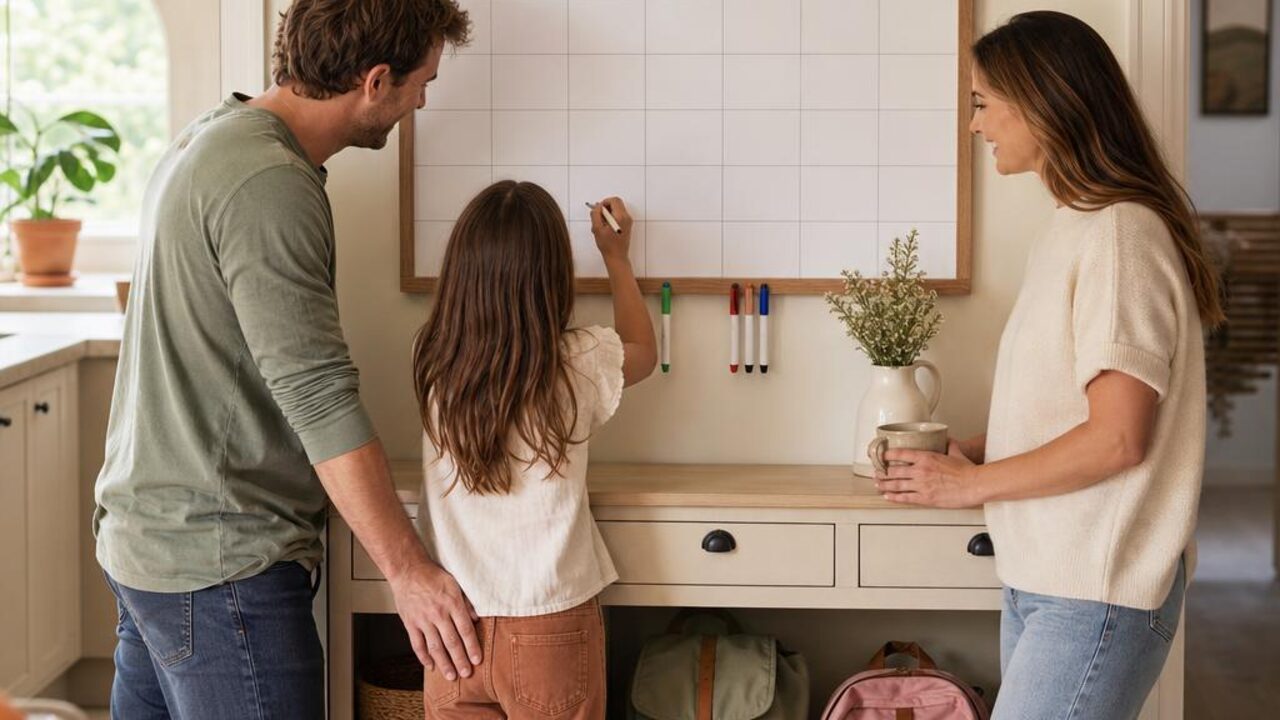
School breaks remove the timetable that normally holds a family week together. That freedom can be welcome, but it also creates a quick pile of questions: who is home, who is working, what activities are booked, when will meals happen, and where can everyone recover? A useful break calendar records the anchors without trying to fill every open hour.
The goal is not a holiday itinerary. It is a shared picture of the week that keeps responsibilities visible and protects some unplanned space.
Start with anchors
Put the fixed events on the calendar first: travel, appointments, booked activities, work shifts, childcare, and any handoff that cannot move. Then add the practical anchors that make those events possible, such as leaving time, pickup, equipment, or a meal before an activity.
Use a simple key or label:
- Fixed: cannot move without consequences
- Flexible: useful but can shift
- Recovery: unbooked time needed after a full day
- Household: meals, errands, and shared tasks
The shared family calendar routine explains why a calendar should show ownership as well as event names. “Swimming” is incomplete if nobody knows who packs the bag or handles pickup.
Plan handoffs in plain language
For every childcare or activity change, record the handoff, not just the destination. Write “Alex picks up at 3:30, bag by the entry” rather than “camp.” If someone else needs to be informed, make that a separate task with a due time.
Keep sensitive information limited to the people who need it. A shared calendar should coordinate the household without becoming a public record of every person's movements. Use the smallest amount of detail that makes the handoff work.
Keep meals flexible
Irregular days make ambitious meal plans fragile. Choose a few anchors, such as breakfast basics, one planned dinner, and a flexible lunch component. Add one no-cook or freezer option for the days that run long.
The school-week home routine offers a useful contrast. During term time, the routine can carry more structure. During a break, let the same meal and grocery system bend instead of forcing school-week timing onto a different kind of day.
Use the home management app or meal planner to keep the food plan visible. Leave one or two meals open so a spontaneous outing does not create waste or a late grocery scramble.
Protect recovery time
Families often schedule activities and forget the cost of moving between them. After a busy day, leave room for a quiet meal, an early night, or time at home. Recovery is not empty space that should automatically receive another appointment.
Look for clusters. Two early starts in a row may need a lighter afternoon. A long activity may need a simple dinner. A parent working during the break may need a clear handoff rather than an assumption that they will fill every gap.
Add a small household rhythm
Breaks still need a few repeatable jobs. Choose one daily reset, such as clearing the table, returning bags, or checking tomorrow's anchors. Give children an age-appropriate contribution with a visible finish line. The family chore chart can help make that contribution clear without turning every free day into a work schedule.
Keep the reset short. The purpose is to make the next day easier, not to reproduce a full school-night routine.
Review the calendar together
Have a five-minute check-in at the start of the break and again halfway through. Ask:
- What is fixed tomorrow?
- Who owns each handoff?
- What food or supplies will we need?
- Where is the household overfull?
- What can remain open?
Move events when the week changes. A calendar that cannot adapt becomes another source of guilt. Mark a change clearly so everyone sees the new plan rather than relying on a hallway conversation.
A good school-break calendar makes the important things findable while leaving the family room to be a family. Record anchors, assign handoffs, plan a few meals, and protect recovery. The blank spaces are part of the design.