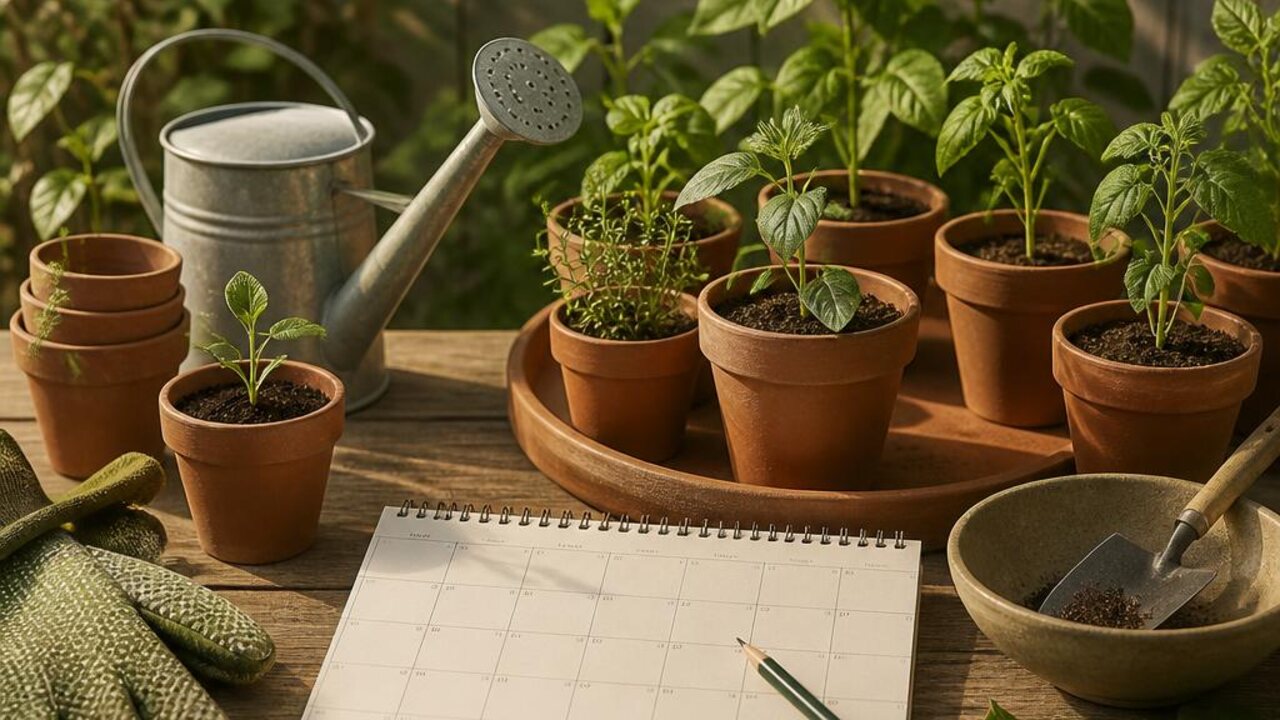
A home garden calendar should remind you of the next useful task, not lock you into a schedule that ignores weather and local growing conditions. Start with the plants and space you already have, then note a few dates to review what needs attention. For plant-specific timing, follow reliable local guidance and product labels.
Plan around your space and season
Write down what you are growing, where it is, and the next seasonal decision you expect to make. A windowsill herb pot, a balcony container, and a yard bed will need different levels of attention. Check your local climate and planting guidance rather than copying dates from a different region.
Keep the calendar limited to tasks you can act on, such as checking containers, preparing a planting area, or reviewing what supplies are on hand. If a task depends on conditions, make it a reminder to check rather than an automatic instruction to act.
Keep supplies connected to the plan
Before shopping, look at the containers, tools, and materials you already have. Add only the supplies that fit the next planned task. Store them in a place that stays suitable for those products and out of reach where needed.
- Add one seasonal check-in rather than many speculative reminders
- Note which plants need a closer look and when to revisit them
- Keep a short list of supplies to use or replace
- Move a task when weather or household plans change
The houseplant care routine for a busy home covers indoor plants, while the seasonal home maintenance checklist shows how to spread household reviews across the year. Keep garden check-ins on the Lucru Home to-do list.
A garden calendar is working when it helps you notice the next step and adapt it to your setting. Review it briefly at the start of each season and keep only the reminders you will use.