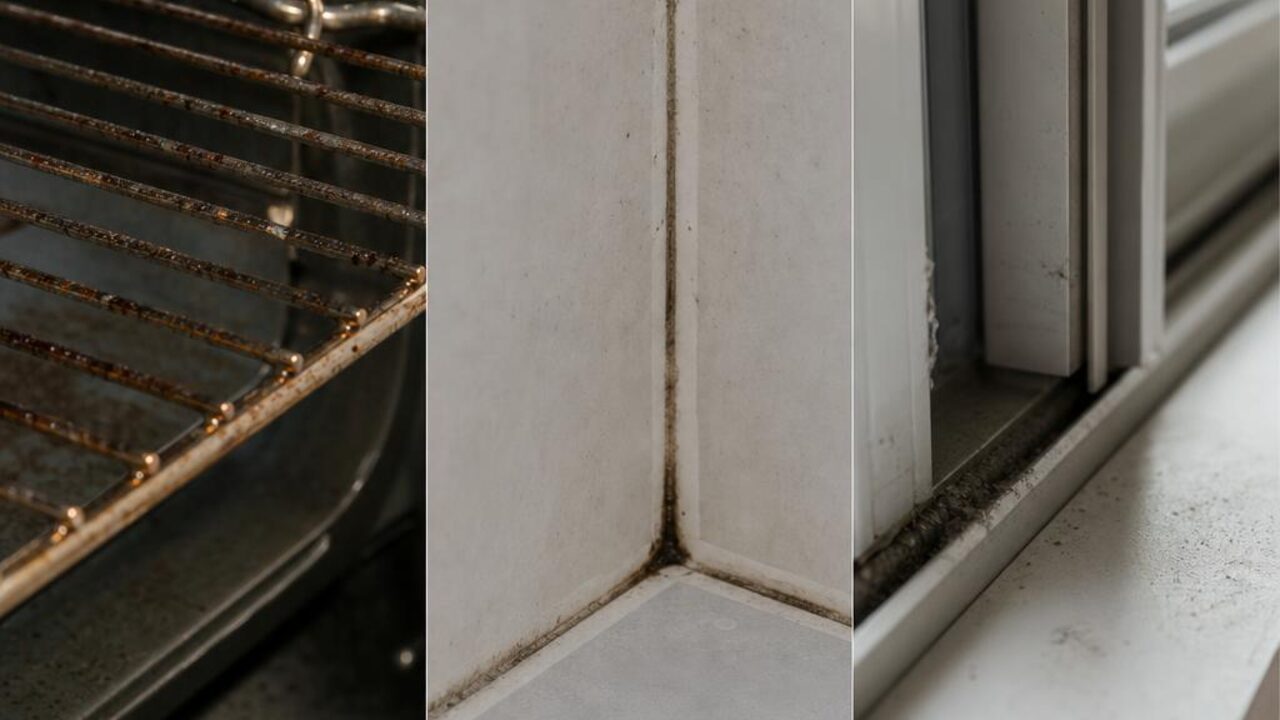
The hardest things to clean in a house are often areas with built-up grease or mineral deposits, narrow access, delicate finishes, or work at height. Difficulty depends on the material, the buildup, the tools available, and whether the job can be done safely.
Treat difficult cleaning as a planning task rather than a race. Identify the surface, follow care guidance, and split the work into manageable sessions or seek qualified help when access or safety is a concern.
Common difficult areas
- Oven interiors and greasy range hoods
- Shower glass, grout, and fixtures with mineral buildup
- Behind or beneath heavy appliances
- Window tracks, blinds, and high shelves
- Upholstery, rugs, and delicate finishes
Start with the surface and access
Check manufacturer care instructions before choosing a product or tool. Use a stable step stool only as intended, avoid overreaching, and do not move heavy appliances alone if that is unsafe. Allow appropriate contact time when a product label directs it, then rinse or wipe as directed.
Avoid common shortcuts
Do not combine cleaning chemicals, use abrasive tools on unknown finishes, or force water into electrical components. A professional may be the safer choice for persistent mould concerns, inaccessible areas, damaged surfaces, or equipment that needs servicing.
The seasonal home maintenance checklist helps separate maintenance from cleaning, and cleaning between deep cleans can reduce buildup over time.
Schedule the work realistically
Assign one hard job at a time and protect enough time for setup and cleanup in the Lucru Home cleaning schedule. Regular small maintenance does not eliminate every difficult job, but it can make the next one less demanding.
Plan one difficult job at a time
Write a narrow goal before bringing out supplies. “Clean the shower door” is manageable; “deep-clean the bathroom” may include too many materials and decisions at once. Check what the surface is made of, what care instructions apply, and whether the area needs ventilation. Gather only tools that are appropriate for that material.
Break the job into stages. For a range hood, for example, the stages might be clearing the work area, removing parts only as the manufacturer permits, cleaning accessible surfaces, drying them, and returning the area to normal use. If the work is taking longer than planned, stop at a safe point and schedule the next stage.
Treat buildup differently from everyday dirt
Built-up grease, soap residue, and mineral deposits often need a method that matches both the surface and the product instructions. Scrubbing harder or using an unfamiliar abrasive can damage a finish. Follow the label's directions, including any contact time, rinsing, or ventilation requirements. Use clean water and cloths only where they are suitable for the item being cleaned.
Before trying a new product on a visible surface, test it in an inconspicuous area if the manufacturer guidance allows. Do not assume that a method safe for tile is safe for natural stone, painted surfaces, or appliance finishes.
Make access safer, not faster
Move loose obstacles out of the way and keep cords and wet cloths from becoming trip hazards. Ask for help or use professional service when a job requires moving a heavy appliance, reaching beyond stable footing, dealing with a damaged electrical component, or accessing an area you cannot safely inspect. Do not climb on counters, furniture, or appliances to reach high places.
Some work is maintenance rather than cleaning. A leak, unusual appliance behavior, damaged seal, or persistent moisture problem needs assessment rather than repeated surface cleaning. Cleaning the visible result without addressing the cause can delay a necessary repair.
Reduce the difficulty next time
Add a small maintenance step to the normal routine once the difficult job is complete. Wiping a frequently used surface after use, clearing a drain cover of visible debris as appropriate, or vacuuming accessible edges can prevent some buildup. Choose only steps that are realistic enough to continue.
FAQ
Are difficult jobs always deep-cleaning jobs?
Often, but not always. A difficult job may be hard because of access or material even when it is small. Conversely, a deep clean may be straightforward when the surfaces are accessible and maintained.
When should I get professional help?
Seek appropriate help when the task involves unsafe access, a repair need, uncertain materials, damaged equipment, or a concern that cannot be safely addressed with ordinary household cleaning. Follow local guidance for disposal or specialist services where applicable.
Can I finish a hard job in one session?
Sometimes. Plan enough time, but do not force completion. A safe, partly completed job with a clear next step is better than rushing and risking damage or injury.