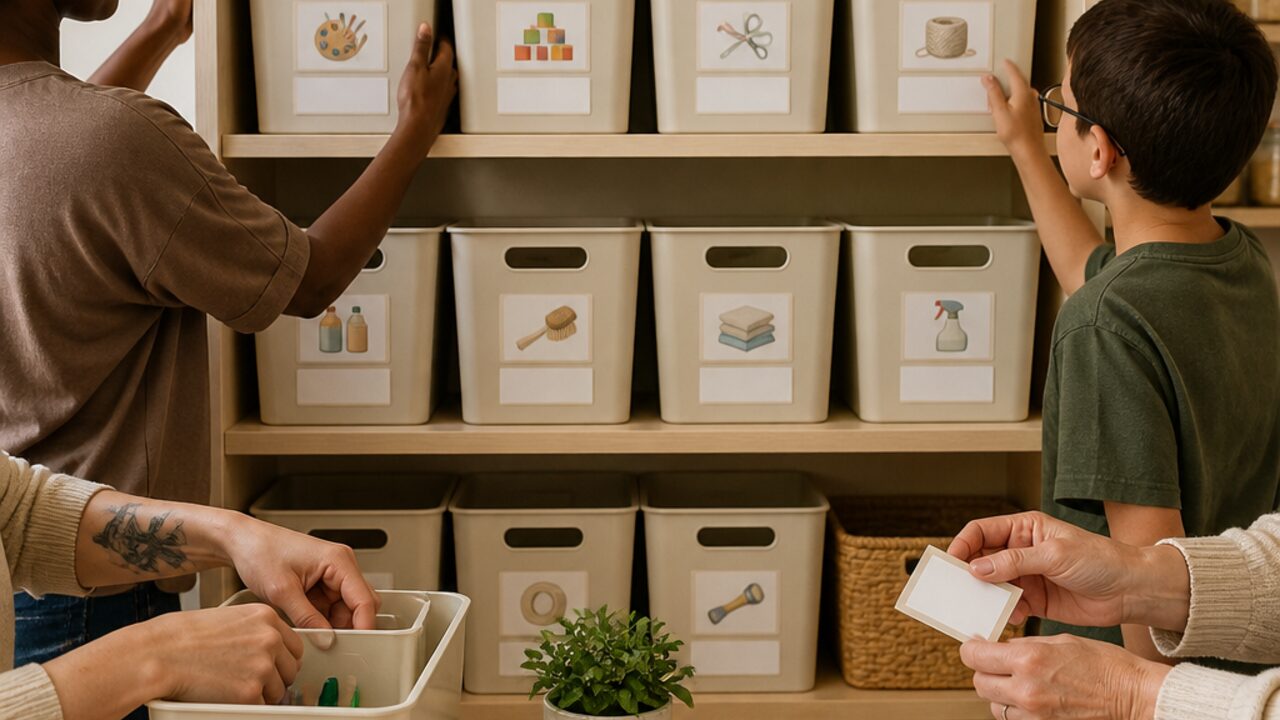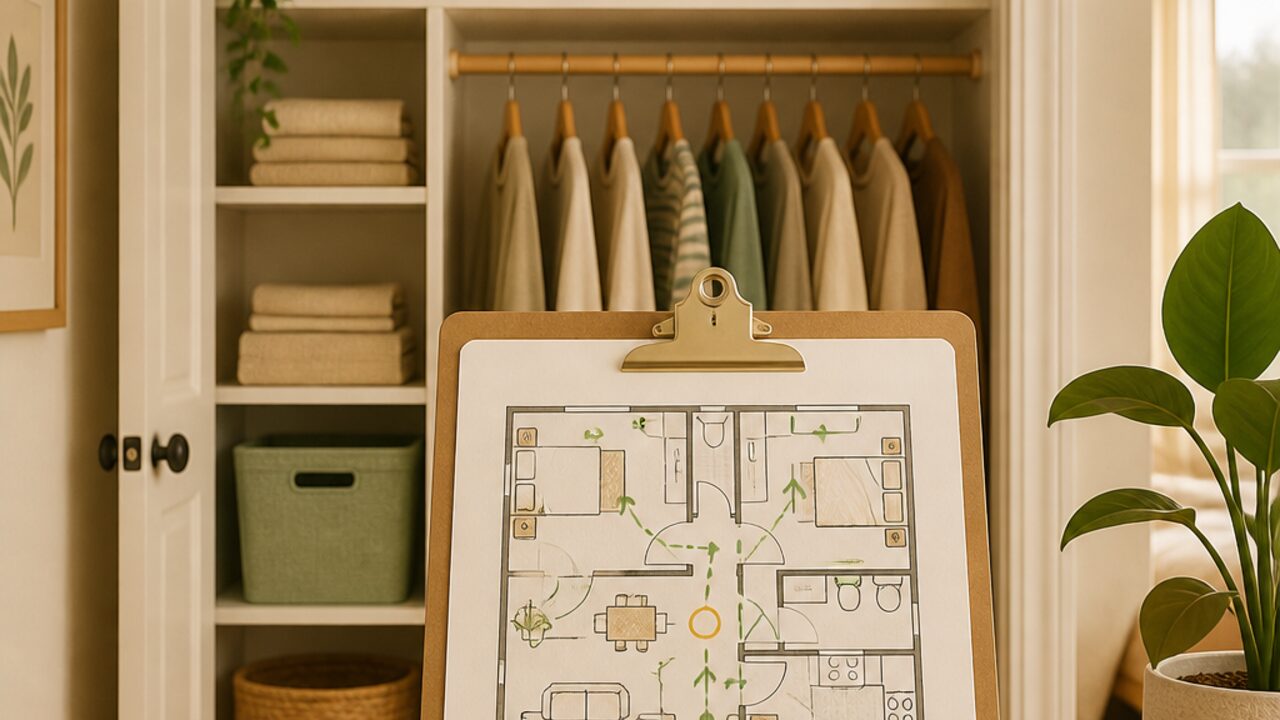
A storage-bin map answers two quick questions: what is in the bin, and where is it stored? Record the shelf or closet location next to the bin's own short label. This helps household members find occasional-use items without rebuilding the room or opening every container.
Name locations before bins
Choose simple location names such as “hall closet, top shelf” or “basement, blue rack.” Use the same wording each time. The map can be a page in a household notebook, a shared digital note, or a small card near the storage area.
- Give each bin a short, unique name.
- Record its current location, not an ideal future location.
- List only the main contents, not every small object.
- Update the map when a bin actually moves.
Make the map easy to maintain
Keep the note close to the storage area or in the place household members already check for shared information. Do not map things that are used every day; the purpose is to make occasional items easier to locate.
The simple household inventory checklist covers a broader inventory, while the shared storage boundary guide helps when storage areas belong to more than one person. Create a one-time map task in Lucru Home and keep the note itself where people can find it.
Map one shelf first
Choose a shelf with bins people often search through, give each bin a short label, and record its location. Test the map with someone who did not create it before mapping another area.