Cleaning a three-bedroom house can take roughly one to several hours, depending on the home's size, number of bathrooms, current condition, tasks included, and how many people are helping. This is a planning range, not a guarantee.
A routine clean is usually shorter because it focuses on pickup, kitchens, bathrooms, dusting, and floors. A deep clean takes longer because it may include detailed work such as appliances, baseboards, interiors of cabinets, or neglected buildup.
Define the scope first
Write down the rooms and tasks before estimating. A small three-bedroom home with one bathroom has a different workload from a larger home with multiple bathrooms, pets, stairs, and heavily used shared spaces.
- Routine reset: dishes, pickup, visible surfaces, bathrooms, and floors
- Standard clean: routine work plus more thorough dusting and room-by-room attention
- Deep clean: detailed surfaces, buildup, appliances, and tasks not done every week
Use variables to make a better estimate
Consider clutter, laundry, pet hair, the number of bathrooms, floor types, and whether supplies are ready. Divide rooms between helpers when possible, but allow time for setup, changing tasks, and putting supplies away.
The cleaning routine for shared spaces can clarify who does what. Use household supply reorder points to avoid discovering missing supplies mid-clean.
Turn the estimate into a plan
Try one routine clean, note the actual time, and adjust future blocks rather than forcing an unrealistic target. Schedule recurring tasks and occasional deep-cleaning jobs in the Lucru Home cleaning schedule.
The most useful estimate is one based on your home's real condition and chosen scope. It should help you allocate time, not judge the result.
Make a first estimate
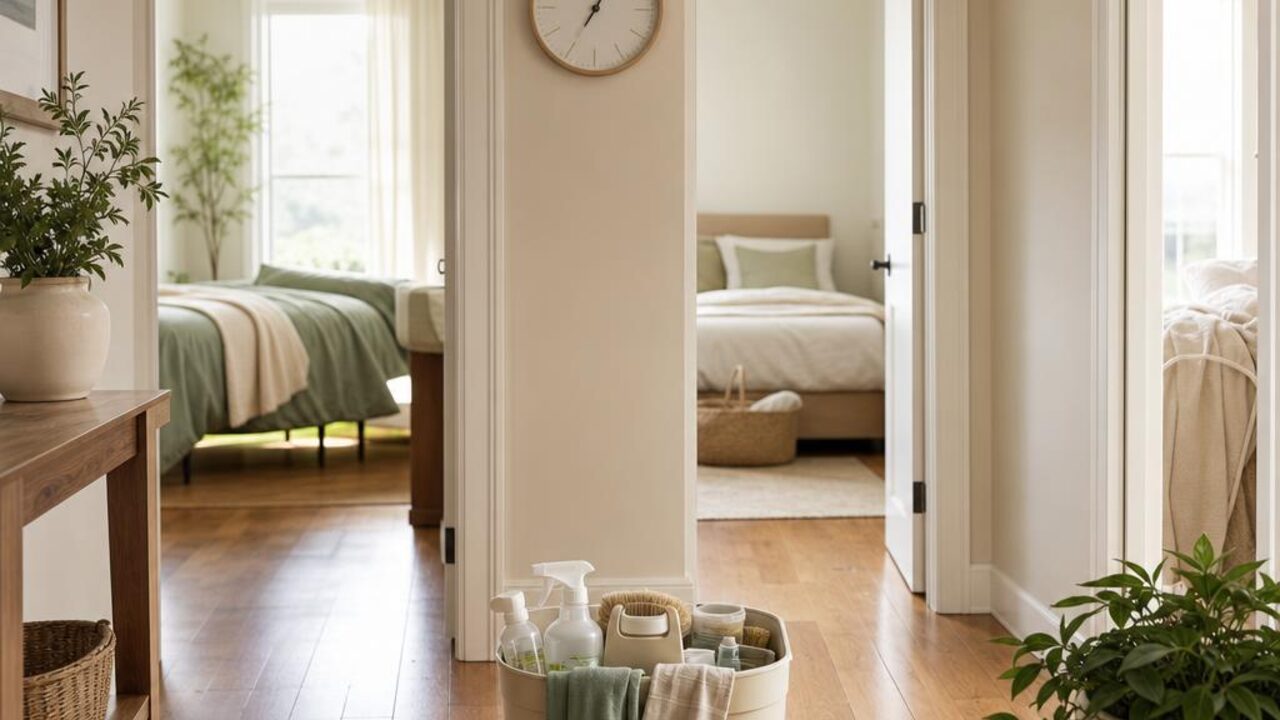
Walk through the house and list the rooms that are actually included. Three bedrooms do not automatically mean three bedrooms need the same work. An unused guest room may need only a quick dust, while a primary bedroom with laundry, pets, or a desk may require more time. Count bathrooms separately because they often determine the length of a routine clean.
Assign a rough block for each part of the chosen scope, then include time to gather supplies and move between floors. For example, a routine clean might include a short kitchen block, a block for each bathroom, bedroom pickup and dusting, then floors. The estimate is a starting plan, not a promise about the finishing time.
Distinguish routine work from deep cleaning
Routine cleaning maintains the areas used every day. It may involve washing dishes, clearing clutter, wiping counters, cleaning bathroom surfaces, and vacuuming or mopping accessible floors. If these tasks are done regularly, they can often be distributed across a week rather than completed in one long session.
Deep cleaning adds work that is not usually part of the routine. Examples may include detailed appliance cleaning, inside cupboards, baseboards, window tracks, shower buildup, or moving accessible furniture. Each added task changes the estimate. A deep clean is better planned as several sessions when the list is long.
Improve the estimate with a trial
Choose a normal routine day and time the major sections without rushing. Note what caused delays: finding supplies, sorting clutter, switching floors, or a task that was larger than expected. The next estimate can account for those facts.
If two people are helping, divide the work by rooms or task types and agree on the finish line. Parallel work can reduce elapsed time, but it does not remove setup, communication, or the need to avoid working around each other in a small room. Do not assume that adding another person will cut the time exactly in half.
Adapt when time is limited
Use a priority list instead of trying to simulate a full clean in a short window:
- Address spills, rubbish, and anything affecting safe access.
- Reset kitchen and bathroom areas that will be used soon.
- Pick up shared spaces and clean the most visible floors.
- Move detailed or low-use rooms to a later block.
This is not a lesser version of cleaning. It is a deliberate routine scope. Record the postponed tasks so they do not become invisible.
FAQ
Can I clean a three-bedroom house in one hour?
It may be possible for a light routine reset in a small, already-maintained home, especially with help. It is not a reliable estimate for every three-bedroom house or for a deep clean.
How do bathrooms affect the estimate?
Each bathroom adds surfaces and fixtures that need their own cleaning process. More bathrooms, heavier use, or buildup can substantially change the time required.
Should bedrooms be cleaned every time?
Not necessarily. Include them based on use and the purpose of the session. A routine may focus on shared areas one week and include detailed bedroom work on a different schedule.