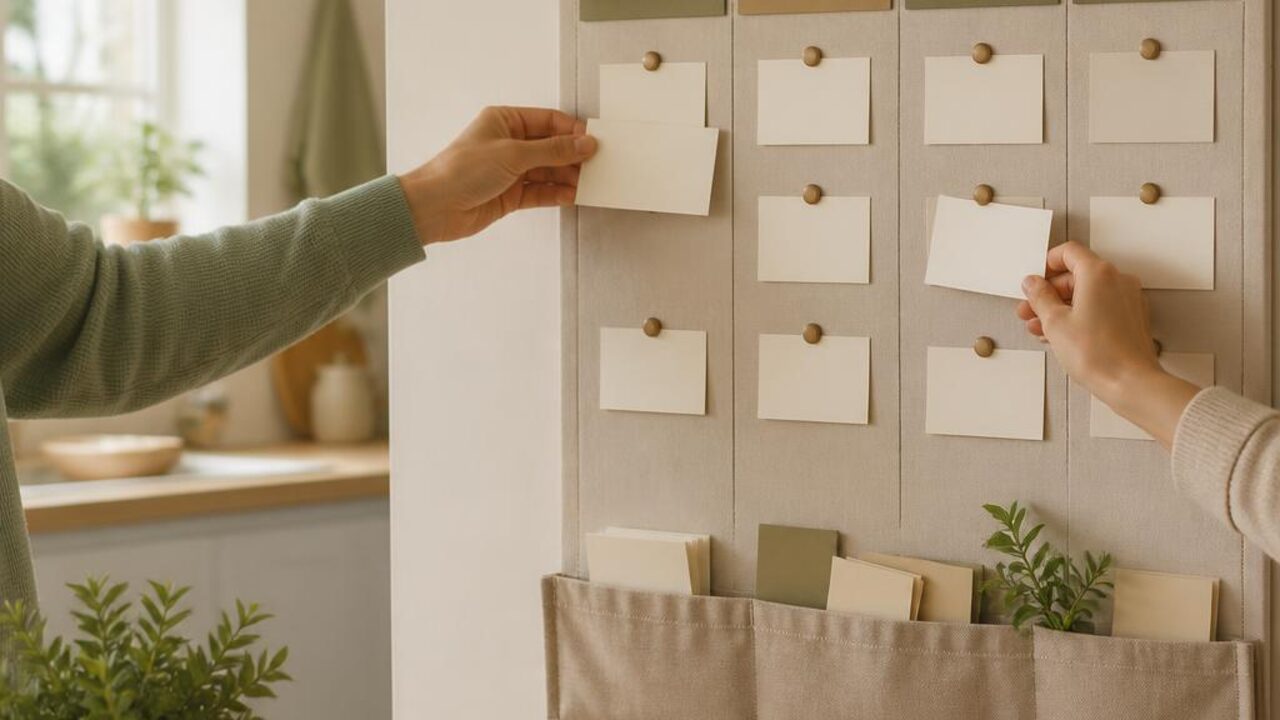
A chore list reduces reminders only when it tells people what needs doing and what “done” means. A vague list such as “clean the kitchen” still leaves the household negotiating the scope, timing, and standard every time.
The answer is not to make the list longer. It is to make each task smaller, visible, and connected to the way the home is actually used.
Define the outcome, not a personal standard
Write tasks as observable outcomes. “Reset the kitchen after dinner” might mean dishes handled, food stored, and the main work surface clear. “Do chores” does not tell anyone where to start or when the job is complete.
Start with a short set:
- Empty or load the dishwasher
- Take rubbish and recycling to the right place
- Reset the shared bathroom sink
- Put away items left in the living room
- Check the grocery list before the next shop
Adjust the wording to your home. The important part is that another person can understand the finish line without asking for a translation.
Match tasks to available time
Not every task belongs on every day. Pair short jobs with transition moments and reserve larger work for a block when someone can reasonably complete it. A task that repeatedly remains unfinished is information about the plan, not proof that the person assigned it does not care.
Use a simple assignment sequence:
- List the recurring outcomes the household needs.
- Group them by daily, weekly, and occasional rhythm.
- Assign the next occurrence based on availability.
- Record supplies or access needed.
- Review the list together and reduce anything that stays undone.
Make ownership flexible
An owner is responsible for noticing the next step, not trapped into doing it under every circumstance. Agree on how to swap a task when schedules change. A visible handoff is better than a silent assumption that somebody else will notice.
For shared spaces, discuss the result the household wants rather than requiring everyone to use the same method. One person may wipe a surface immediately, another may group the work into a short evening block. If the agreed outcome is met, the routine can have room for different working styles.
Fairness is easier to discuss when the work is visible and the finish line is clear.
Replace reminders with a review point
Repeated reminders often mean the list is being used as a message board instead of a shared planning tool. Choose a short review point, such as a weekly household check-in, to move tasks, update owners, and name anything blocked. Between reviews, let the list carry ordinary reminders.
The family chore chart that actually works can help you structure recurring ownership, while the household task handoffs guide covers what to include when a task changes hands. Keep the live list in the Lucru Home to-do list so everyone can see what is due.
A shared chore list is working when people can act without asking who remembers the task. Keep it short, review it calmly, and change the system when the household changes.