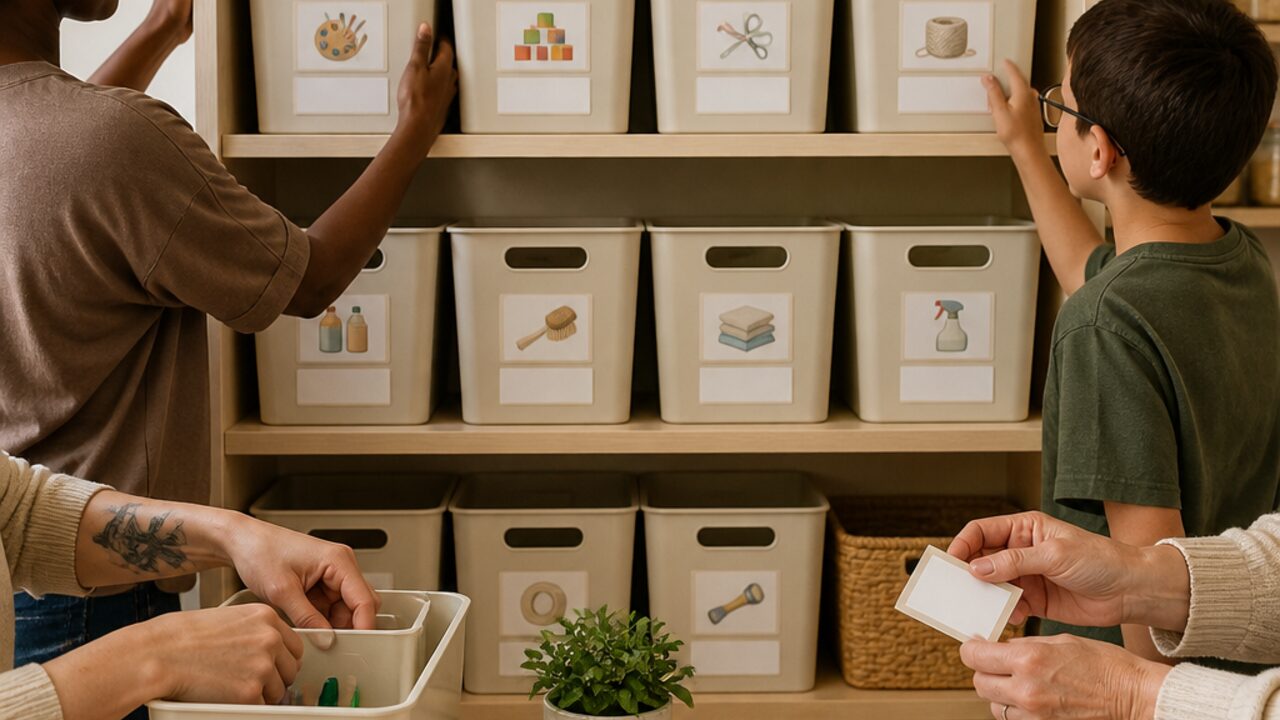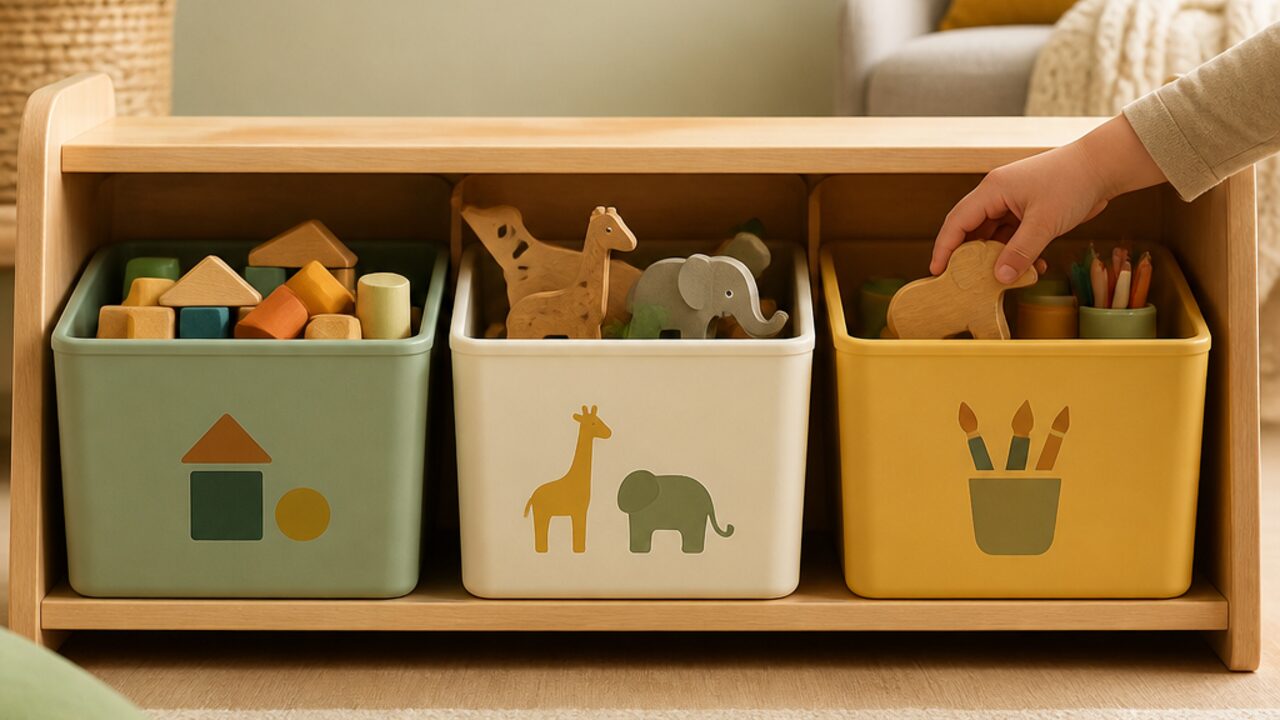
Picture labels can help young children recognize where toys belong before they can read a written label. Use a clear image on a few low bins, keep each category broad enough to sort quickly, and let the child test whether the picture makes sense.
Choose only a few categories
Start with the toys that are already stored together. A picture of blocks can label one bin; a photo of the actual animal figures may work better than a generic drawing. Avoid making a separate category for every toy.
- Keep the image large enough to recognize from the floor.
- Pair a picture with a short word for adults and older children.
- Put the label on the front where it stays visible.
- Use removable labels so the system can change as interests change.
Test before making a full set
Make two or three labels and ask the child to put toys away. Watch where they hesitate. If a toy reasonably fits several categories, choose one home and keep the picture specific. Store rarely used or fragile pieces outside the everyday bins.
The family toy reset routine offers a broader end-of-play approach, while everyday item access helps with reachable storage. Track one small label-making task in the Lucru Home habit tracker only if a recurring review would help.
Let the child choose a label
Take a photo of one toy category, print or draw a clear picture, and attach it to the bin the child already uses. Try it during the next tidy-up before labeling the rest.