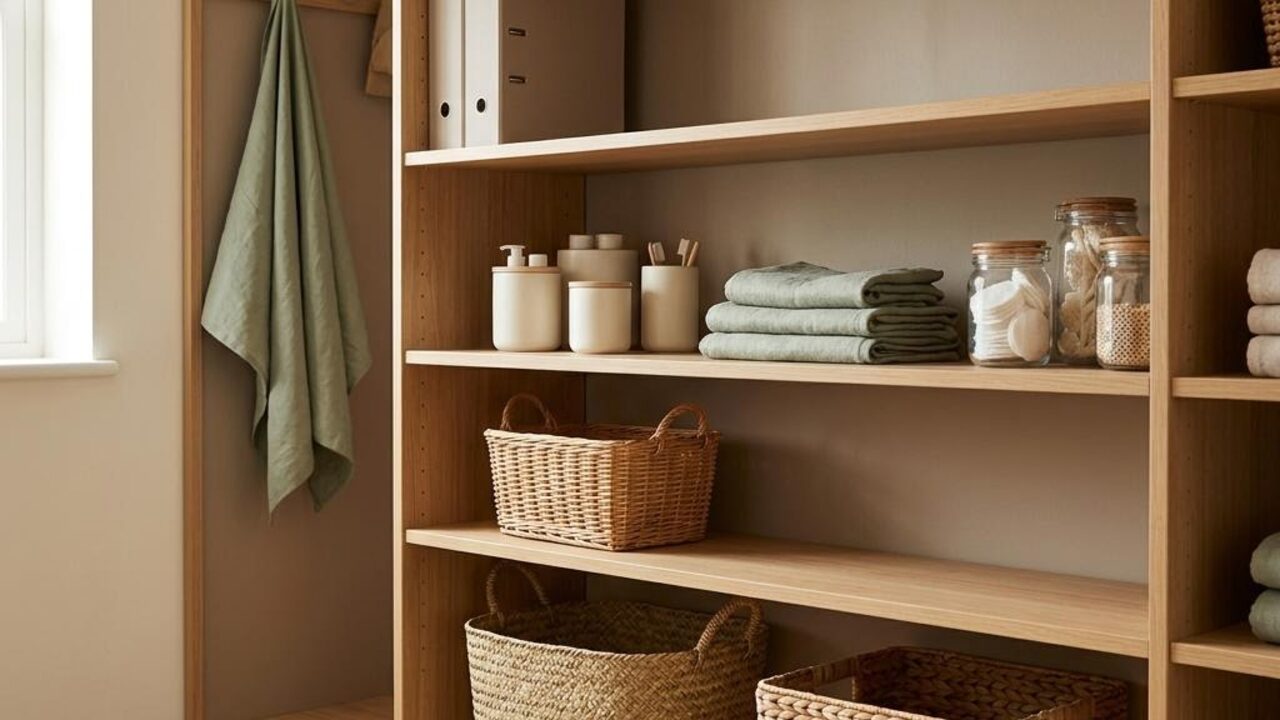
A shared storage space is not just a pile of objects. It is a collection of different owners, memories, future plans, and assumptions about who may use what. Decluttering it well requires a decision process that protects ownership and keeps the work bounded.
Choose one section of the space and agree on what “finished” means before pulling anything out. A shelf, cabinet, or corner is enough for one session.
Make ownership visible first
Before deciding what stays, mark items as belonging to one person, the household, or an unclear owner. Do not donate, discard, or relocate another person's item without their agreement. A short ownership conversation can prevent a much longer repair later.
Create four working zones:
- Keep here because this is the right home
- Relocate because it belongs elsewhere
- Release because the owner has decided it can leave
- Decide later because the owner is not available
The last zone needs a limit. It should be a small, dated holding area, not a new permanent category.
Use questions instead of pressure
For each item, ask who uses it, where it should live, and what would happen if it were not here. If an item is seasonal or needed for a specific project, record that context. If its future use is uncertain, let the owner decide without turning the uncertainty into an argument.
Shared decisions move faster when people are allowed to explain an item once and then choose. The purpose is a usable space, not a debate over whose standard is correct.
A shared storage reset succeeds when both the space and the ownership are clearer afterward.
Work in a short sequence
Set a timer and work from one boundary to another. Pull out only enough to sort safely, return the keep items to their homes, and remove the relocate items before starting another zone. If a donation or release pile remains in the hallway, give it a next action and an owner.
Label the shelves or containers only after the contents have been decided. Labels should describe what belongs there, not create an elaborate system that the household will not maintain.
Stop before the room takes over
End when the agreed section is usable, even if another section remains. Photograph the finished area or write a one-line note so the household can remember what changed. Schedule the next zone only if there is enough capacity to finish it.
The home decluttering guide offers a room-by-room starting point, and small-space home management can help when storage capacity is limited. Keep ownership and next actions visible in the Lucru Home home management app.
A shared storage space does not need one person's perfect system. It needs clear decisions, respectful ownership, and a stopping point that lets everyone keep living in the home.