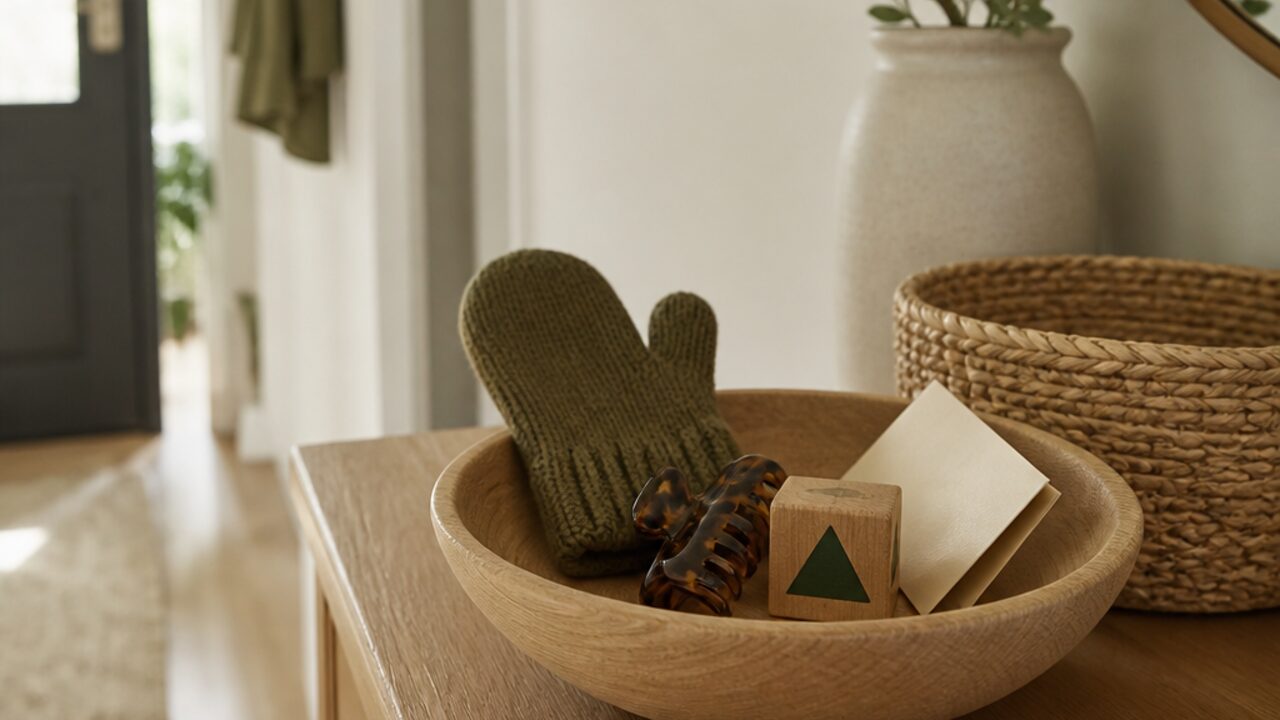
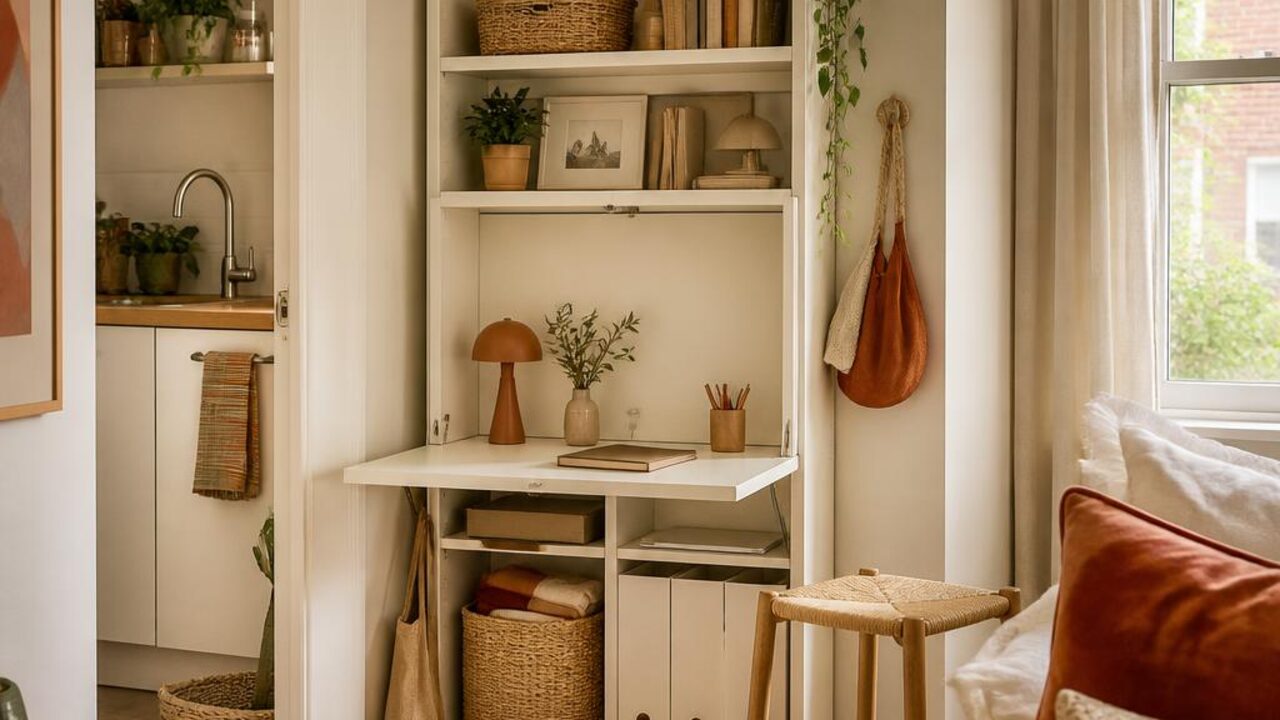
Small-space home management is less about fitting more into the home and more about making each recurring decision easy to find. Keep a short list of regular care, track the supplies that genuinely run low, plan meals around the storage and equipment you have, and make responsibilities visible. The system should reduce clutter in the home and in your head.
Limited space changes the cost of a duplicate purchase, an unfinished project, or a supply with no clear home. A lighter plan helps you notice those patterns before they take over a shelf, counter, or room.
Start with the space you actually have
Walk through the home and identify the surfaces, storage areas, and routes that matter most. Note where food is stored, where cleaning supplies can safely live, where laundry accumulates, and which area becomes difficult first when the week is busy.
Do not begin by buying organizers. Begin by describing the current constraints:
- Which storage areas are full?
- Which items are used often?
- Which items are duplicates or rarely used?
- Where does an unfinished task usually land?
- Which surface needs to remain clear for daily life?
The decluttering guide can help with a broader sort. In a small home, make one zone usable before moving to another. The goal is not an empty room. It is a space where the things you use can be reached and returned.
Keep supplies visible and bounded
A small home benefits from a short, honest inventory. Track the items that affect shopping or daily routines, such as pantry staples, cleaning products, toiletries, or laundry supplies. Use a quantity that is useful enough to prevent a duplicate buy, without counting every individual item.
Set a practical boundary for each category:
- One open item plus one backup, if that fits your household
- One defined shelf or bin for a supply
- A low-stock point that prompts the next shop
- A clear place for items waiting to leave the home
Lucru Home's pantry can track quantities and surface low-stock or expiry context. Apply the same idea to other supplies with a short recurring check or to-do, rather than storing every detail in memory.
Plan meals around capacity and storage
Small kitchens and small refrigerators reward meals that share ingredients without requiring identical portions. Choose a few dependable meals, use flexible components, and leave room for leftovers or a night outside the home. Check the pantry and refrigerator before adding a large restock to the plan.
Keep a small weekly structure:
- One meal that uses a perishable item soon
- One meal that can change shape as leftovers
- One quick or no-cook fallback
- One flexible night for plans or appetite changes
- One grocery review based on the space available
The solo renter home management guide covers the broader challenge of running a home without a separate utility room, storage area, or household team. The same principle helps any small household: choose systems that fit the actual footprint.
Assign recurring care to a rhythm
When there is less space, small messes become visible quickly. That does not mean every surface needs daily attention. Match the task to its real rhythm. Clear the cooking surface when it blocks the next meal, schedule floor care at a frequency that fits use, and keep larger maintenance tasks separate from everyday tidying.
Lucru Home's cleaning area organizes recurring tasks by room and frequency. Use it to make the minimum care visible, then keep one-off decluttering or repair tasks in the to-do list. A short list is easier to trust than a complete catalogue of every possible improvement.
Make responsibilities easy to see
If you live with another person, limited space can make shared work feel constant because the result is visible everywhere. Keep ownership clear without assigning every small action. One person may own the weekly grocery review, another the bathroom task, and both may share the decision about what the home can hold.
Use a shared task that says what done means. “Keep the entry clear” is a principle. “Sort the shoes by Friday and leave two pairs within reach” is a task. Review responsibilities when schedules change rather than assuming the old split still works.
Create a reset that protects the next day
A small-space reset should focus on the places that make tomorrow easier:
- Return items that are blocking a route
- Clear the surface needed first in the morning
- Put away food so the next inventory is accurate
- Gather items that need to leave the home
- Write one next action for an unfinished project
Stop when those areas work. Do not let the reset become a reason to pull every cupboard apart at night.
Let the system change with the home
Small spaces change as people move in, work patterns shift, or equipment changes. Review the system when a recurring problem appears. A supply may need a smaller purchase, a meal plan may need fewer fresh ingredients, or a task may need a new owner.
Finish with one clear improvement to test this week, not a complete redesign. Explore the Lucru Home home management app to keep routines, meals, pantry context, and shared household work close together even when the home itself has limited room.