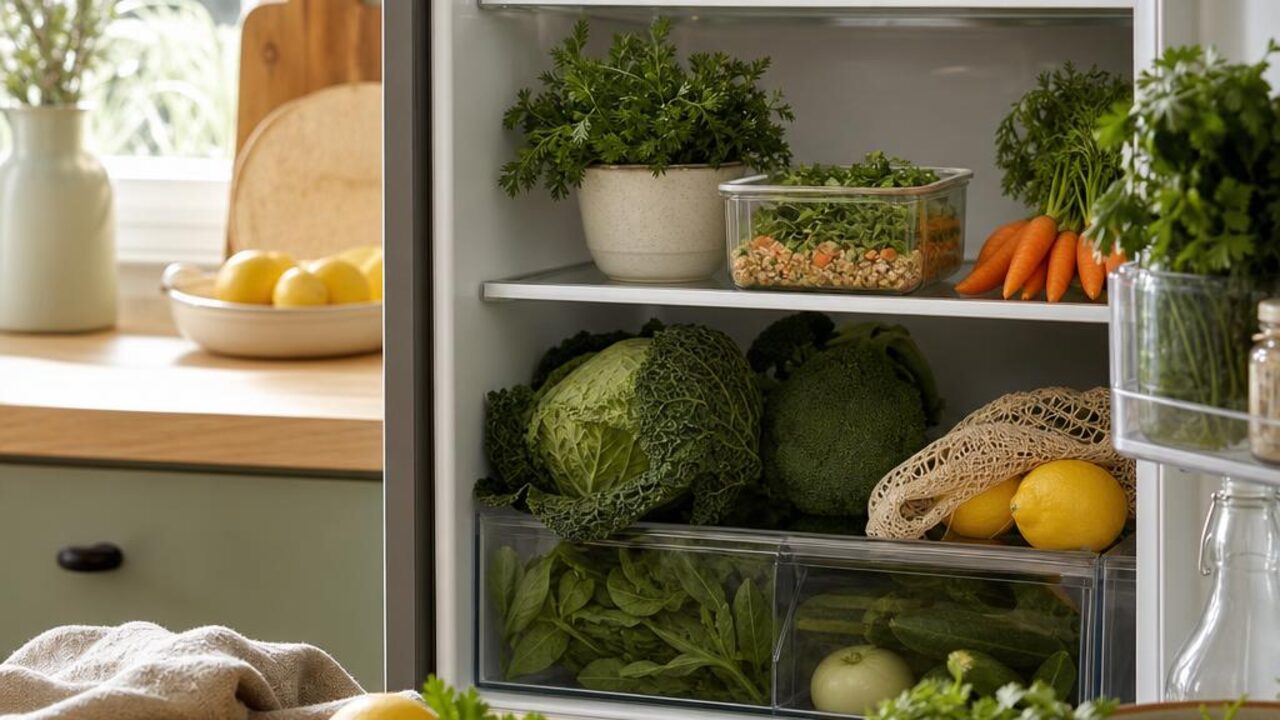
Meal planning usually starts with recipes and ends with a grocery list. A fridge-first plan reverses the order. You look at what needs using, choose meals that can absorb it, and buy only the pieces that are missing.
This is not a challenge to use every leftover in one strange dinner. It is a small change that helps the food you already own influence the next few choices.
Start with a quick, useful inventory
You do not need a perfect count of every item. Look for ingredients that have a short window:
- Produce that is softening or wilting
- Open dairy, sauces, or herbs
- Cooked grains, proteins, or leftovers
- Ingredients bought for a recipe that never happened
Group them by how urgently they need attention. Then choose one meal that uses the most time-sensitive item and one meal that can flex around whatever remains.
Use adaptable meal shapes
Flexible formats are easier than searching for a recipe for every ingredient. Pasta, grain bowls, soups, frittatas, tacos, and sheet-pan meals can change with the vegetables and proteins you have. Keep the seasoning or sauce consistent enough that substitutions still feel intentional.
The pantry-first meal planning guide and freezer inventory guide extend the same idea beyond the fridge. Lucru Home can keep the meal plan, recipes, pantry, and grocery list connected so you can see what to use before you shop.
The best meal plan is not the one with the most recipes. It is the one that notices what needs using.
Add only the missing pieces
After choosing the meals, check your pantry and grocery list. Add the ingredients that complete the plan, not every item that might be useful someday. Keep one flexible night for leftovers or a meal out so the plan can bend.
At the end of the week, notice which ingredients repeatedly go unused. Buy less, freeze sooner, or stop planning around recipes that do not fit your real schedule. A fridge-first rhythm gets easier as it learns what your household actually eats.