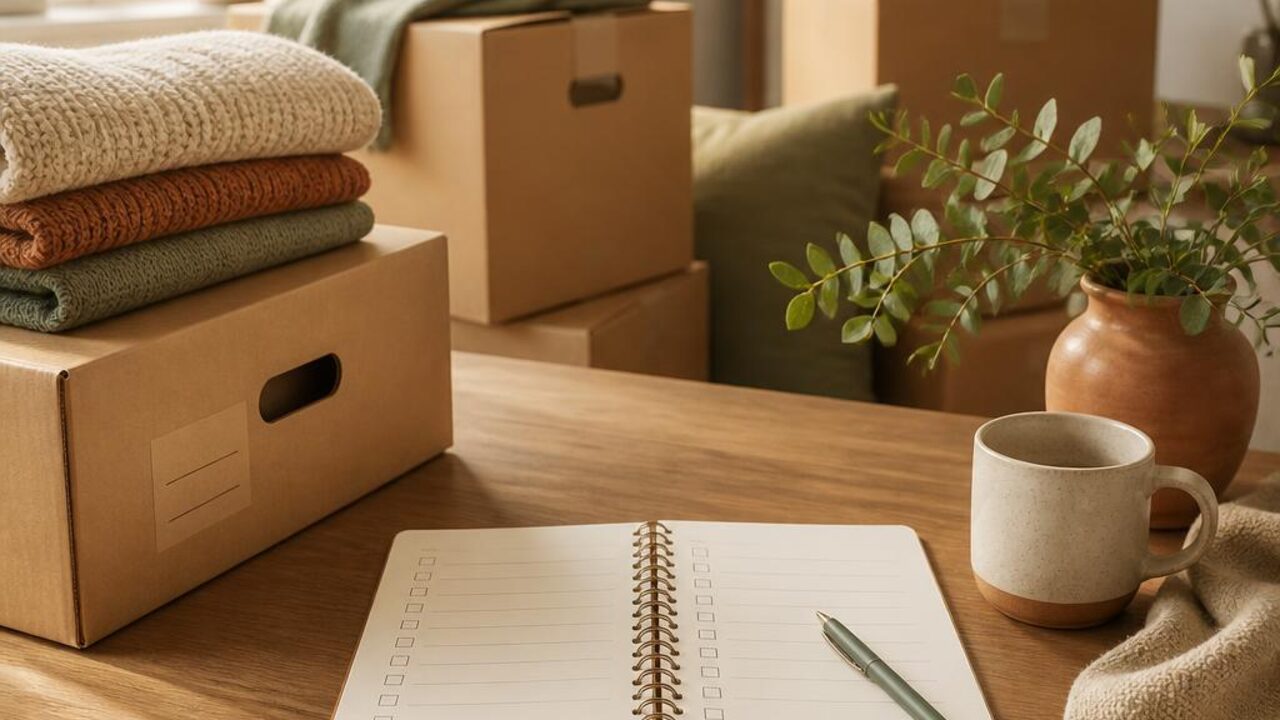
Moving creates a long list of small decisions, and the list gets harder to trust when it lives in several notes, messages, and boxes. A household moving checklist makes the process calmer by grouping work into phases. You do not need to finish everything at once. You need to know what matters now, what can wait, and what has a clear owner.
The best checklist is specific enough to act on and light enough to review every day.
Start with the move phases
Begin with four simple sections rather than one enormous list:
- Before packing: decide what is moving, what is being donated, and what needs a service or appointment
- Packing: group boxes by room, label essentials, and record anything fragile or time-sensitive
- Move week: confirm access, keys, utilities, transport, and the people responsible for each handoff
- First week: unpack essentials, update the household plan, and capture unfinished tasks
This structure prevents first-week work from getting buried under decisions that belong months earlier.
Make an essentials plan
Pack one clearly marked group for the first night and morning. Include basic clothes, toiletries, medication you already use as directed, chargers, simple food, cleaning supplies, and the documents or keys you will need immediately. Keep the list practical and check it before the boxes are sealed.
A move feels less chaotic when the first morning has its own small plan.
Give every open item a next action
“Sort the garage” is a project, not a useful next step. Turn it into actions such as measure the shelves, choose the keep area, label three boxes, or book a donation pickup. Assign a person and a time block where that will prevent a handoff from disappearing.
For each open item, record:
- The next physical action
- The person who owns it
- The date or phase when it matters
- What information or item is needed first
The home project weekend plan can help turn unpacking into manageable sessions, while the household document organizer keeps important papers easy to find. Keep the full move checklist in the Lucru Home to-do list so the next action stays visible.
After the move, do one short review instead of trying to perfect the new home immediately. Note what is still open, what belongs on a normal maintenance rhythm, and what can wait. A move is complete when the household can run again, not when every box has vanished.