Household documents become stressful when they are both important and difficult to find. A lease is in an email, an appliance manual is in a drawer, a receipt is attached to a shopping account, and a reminder about a renewal lives in someone's memory. The answer is not to keep every piece of paper forever or build an elaborate archive. It is to create a small, consistent map of what exists and where it lives.
This is an organization system, not legal or insurance advice. Keep documents according to the requirements that apply to your situation, and ask a qualified professional when you need help understanding an obligation or coverage. The practical goal here is simply to make your own records easier to retrieve.
Choose the home for each record
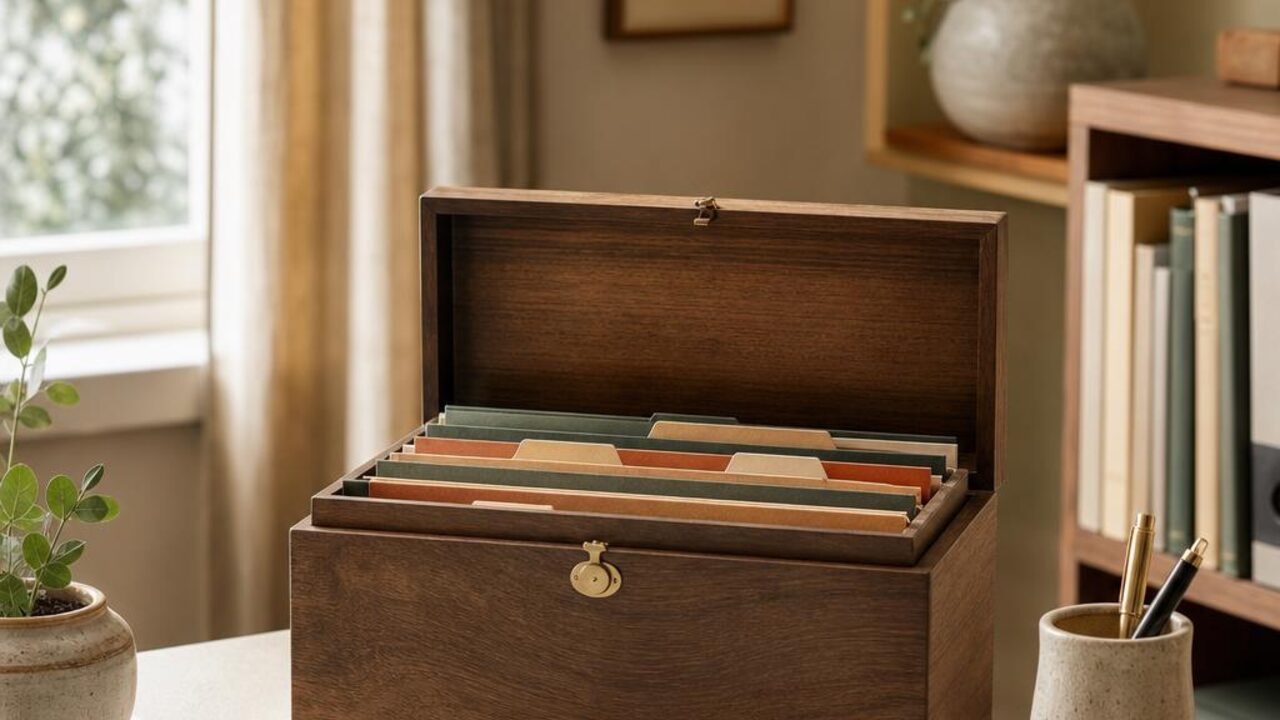
Start with one primary digital folder, filing box, or combination of the two. The location matters less than being able to explain it to another person in the household. Use plain categories that match the questions you ask:
- Home and occupancy: lease, purchase records, building contacts, and move-in notes
- Appliances and systems: manuals, model numbers, installation records, and service notes
- Purchases and repairs: receipts, invoices, and completed work
- Household people and pets: relevant records stored with appropriate privacy
- Renewals and follow-ups: dates that need attention, without putting sensitive details in a shared task title
Keep a short index at the front of the folder or in a note. It can say “dishwasher manual, digital folder, systems” or “paint receipt, paper folder, repairs.” The index is not a duplicate archive. It is a map.
The household command center offers a useful model for keeping the household's important information visible without scattering it across unrelated notes.
Use a naming pattern you will repeat
Digital records are easier to search when names start with the same information. A practical pattern is “item - document type - date,” such as “dishwasher - receipt - 2026-04-12” or “lease - signed copy - 2026.” Avoid relying on “final,” “new,” or “scan 4,” because those labels lose meaning quickly.
For paper, use the same categories and add a small label to the outside of each section. Put loose receipts in a temporary inbox instead of filing them immediately. The inbox should have a review date, so it does not become a permanent pile.
Do not put passwords, access codes, or highly sensitive identity information into a general shared note. Use the secure system intended for those details, and limit access to the people who need it.
Separate records from reminders
A document tells you what happened or what was agreed. A reminder tells you what to do next. Keep those two jobs connected but separate. “Warranty PDF” belongs in the records system. “Check warranty contact before service call” belongs on the task list with a due date.
This separation prevents a common failure: burying an important follow-up inside a filename and then forgetting it exists. In Lucru Home, the to-do list can hold the next action, while the task description can point to the record's location without copying private document contents.
Add only useful dates
Not every document needs a calendar entry. Add a date when an action is genuinely required or helpful: a renewal conversation, a service follow-up, a return window, or a planned review of household records. Use a clear verb and a date, such as “review appliance service note” rather than “warranty.”
At the end of each month, scan the follow-up list and close anything complete. Move dates that changed instead of creating duplicates. If no action is needed, keep the record filed and leave it off the active list.
The household admin day can provide a regular place for this short review. It works best as a contained session with a beginning and end, not as an invitation to reorganize the entire household every weekend.
Make handoff possible
A system is calm when another person can use it without asking you where everything is. Put the index somewhere visible, name folders plainly, and agree on what belongs in the temporary inbox. If a record is private, mark the privacy boundary rather than hiding it in an unexplained location.
For a repair or maintenance issue, keep the record together: the receipt, model information, photos if useful, and the next action. The renter maintenance tracker shows how to keep a repair's status and follow-up visible without treating organization as a substitute for professional advice.
Once the categories, naming pattern, and reminder boundary are in place, stop improving the system. A document organizer is successful when you can find the record you need, understand its next action, and return to the rest of your day. Keep it boring, clear, and easy to maintain.