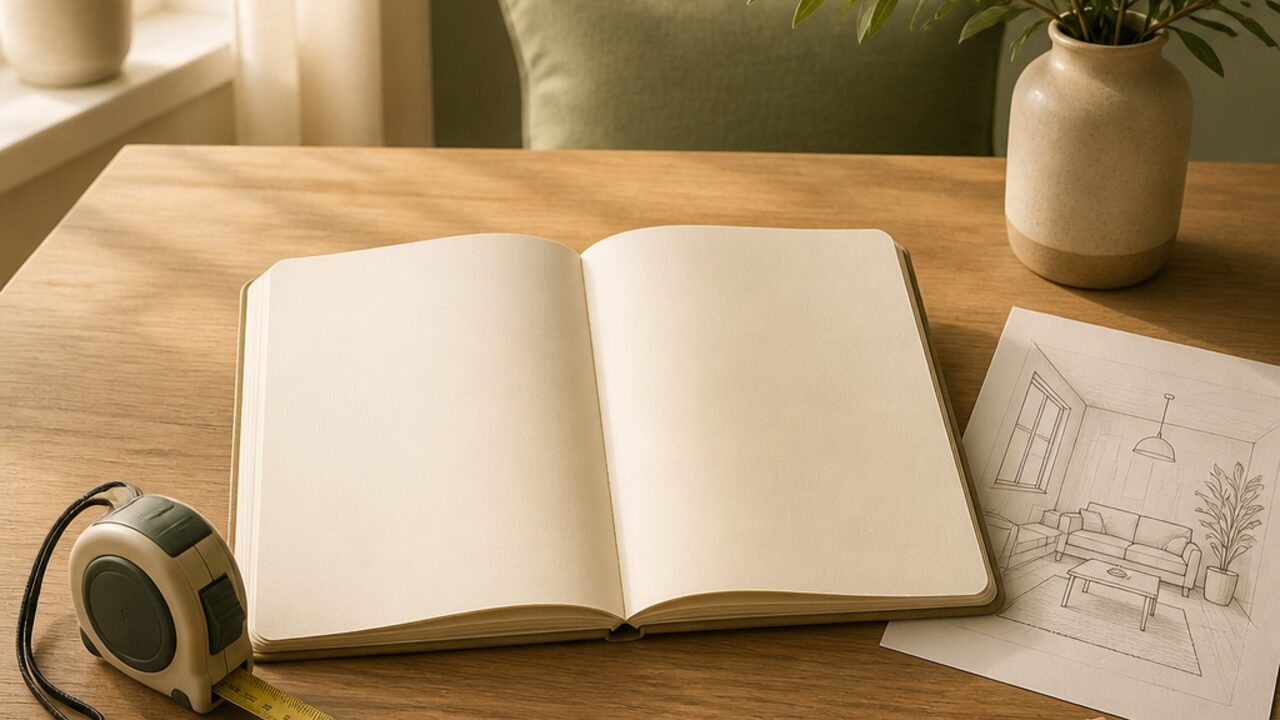
A small measurement notebook can save repeat trips across a room when comparing furniture or storage. Record the dimensions that answer real shopping questions, name the room clearly, and note when a measurement was taken.
Start with the decision you need to make
Before measuring, write down what you may buy or rearrange. A shelf may need width and height, while a chair may need a clear floor area. Note the doorway or hallway measurement only when an item must travel through it.
- Use the same unit throughout the notebook.
- Label every measurement with the room and surface.
- Note whether a measurement is approximate.
- Include a quick sketch when a corner or alcove is hard to describe.
Keep the reference easy to update
Store the notebook or note in the household's normal shared information spot. Add the date and change a measurement when the room changes. Avoid recording dimensions no one uses; an accurate, short reference is more useful than a complete map that quickly becomes stale.
The home project scope checklist helps define a larger change before it starts, and the home project purchase tracker keeps one project's spending visible. Save a next step in the Lucru Home home-management app when you are comparing a specific purchase.
Record one room first
Choose a room where you expect to compare furniture or storage, record the key dimensions and date, and use that note during your next shopping comparison. Update it only when the room changes.