A household lost-and-found system works best as a temporary stop, not a new storage category. Choose one small tray in a shared area, agree what belongs there, and check it at a predictable time. That gives found items a path back to their owners without turning them into an indefinite pile.
Choose the container and location
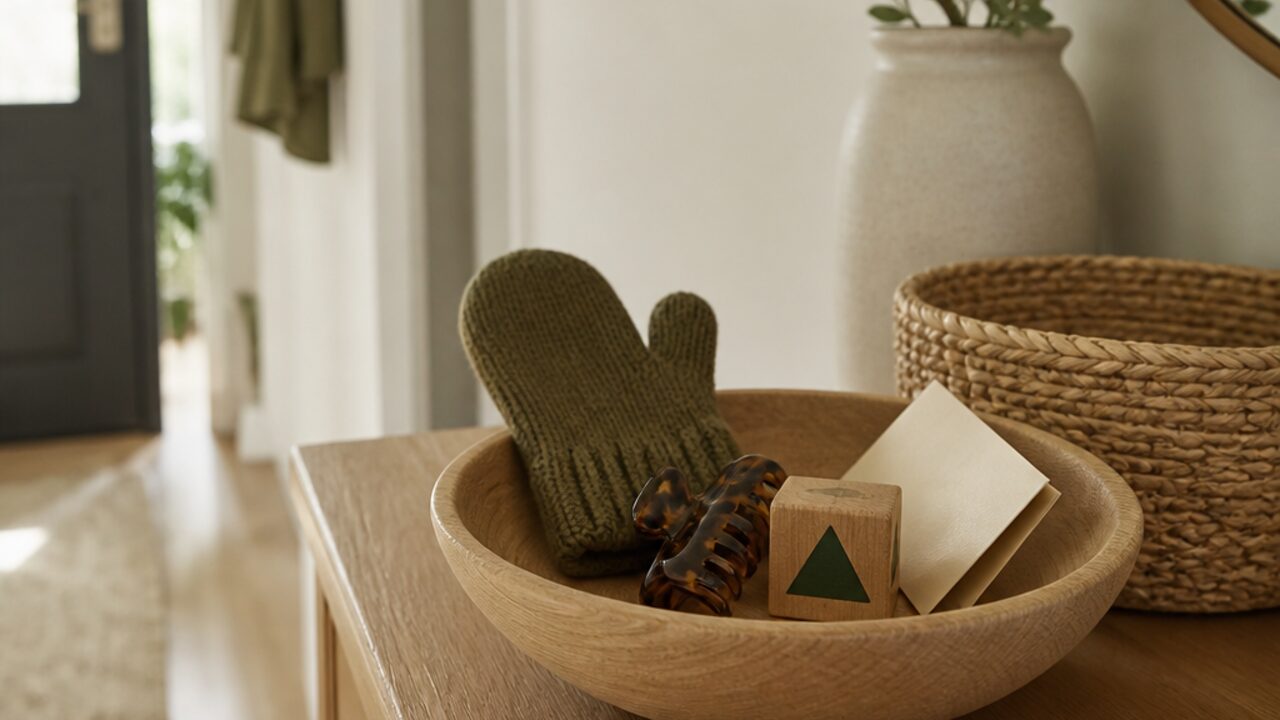
Use a tray or shallow basket that holds only a few items. Put it where people naturally pass, but away from the entryway drop zone so it does not blend into everyday keys and bags.
- Keep the container small enough to show when it is full.
- Accept only items found in shared rooms, not everyone's private belongings.
- Avoid placing fragile, perishable, or sensitive items in a public holding spot.
Make claiming easy
At a household check-in, point out the new location and agree how long items stay. A brief note beside the basket can say when it will be checked, without turning it into a public list of personal belongings. Give people a chance to claim an item before moving it elsewhere.
Close the loop
Return claimed items promptly. If an item remains, ask once more before following your normal household process for unwanted belongings. Do not guess who owns something based only on where it was found.
The everyday essentials landing zone is for belongings people use and put away each day. The household item decision routine helps when an unclaimed object needs a longer-term decision. Add a recurring check to the Lucru Home to-do list.
Start with one basket
Put one small tray in a shared room and tell everyone what it is for. Choose the first review day before the tray fills, then return the first claimed item right away.