
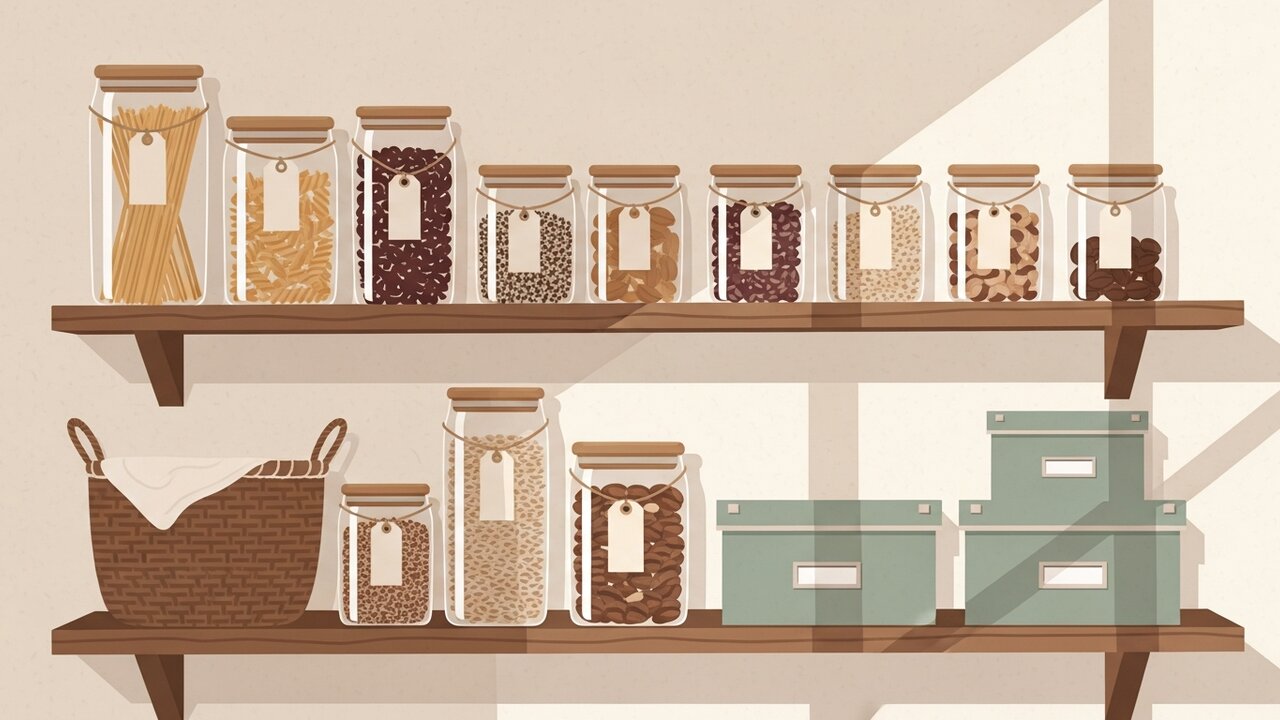
A good pantry is quietly one of the most useful things in a home. It is the difference between "there is nothing to eat" and a real meal pulled together in twenty minutes. It is also where a surprising amount of money disappears, through forgotten cans, duplicate buys, and produce that quietly goes bad in the back of a shelf.
Running a smarter pantry is not about owning more. It is about knowing what you have and using it before it expires.
Know what you actually have
You cannot cook from, or shop around, a pantry you cannot see. The first step is a simple inventory: what is on the shelves, roughly how much, and when the perishable items expire.
In Lucru Home, the pantry tracks quantities and flags two things that quietly cost you money:
- Low-stock items, so a staple never runs out mid-recipe
- Items nearing their expiry date, so you use them while they are still good
The cheapest meal in your home is almost always the one made from food you already own.
Shop your pantry first
Before you write a grocery list, look at what is already there. Plan a meal or two around the items closest to expiring, and check your stock so you are not buying a third jar of something you already have two of.
This one habit, shopping your own shelves before the store, cuts both waste and spending without any extra effort. It simply reorders the steps you were already taking.
Cook from what you have
Some of the best weeknight dinners come from the question "what can I make with this?" rather than a recipe you went out and shopped for. Lucru Home can suggest meals based on what is in your pantry, turning a half-empty fridge into a plan instead of a takeout order.
Keep a small set of flexible, pantry-friendly meals in your back pocket: a pasta, a grain bowl, a soup, a frittata. Each one absorbs whatever vegetables and proteins need using up.
Keep it current, lightly
A pantry list only helps if it reflects reality. Update it as you shop and cook, in small moments rather than big audits. Add items as you put the groceries away, and check things off as you use them. A few seconds at a time keeps the whole system honest, and keeps those last-minute trips to a minimum.