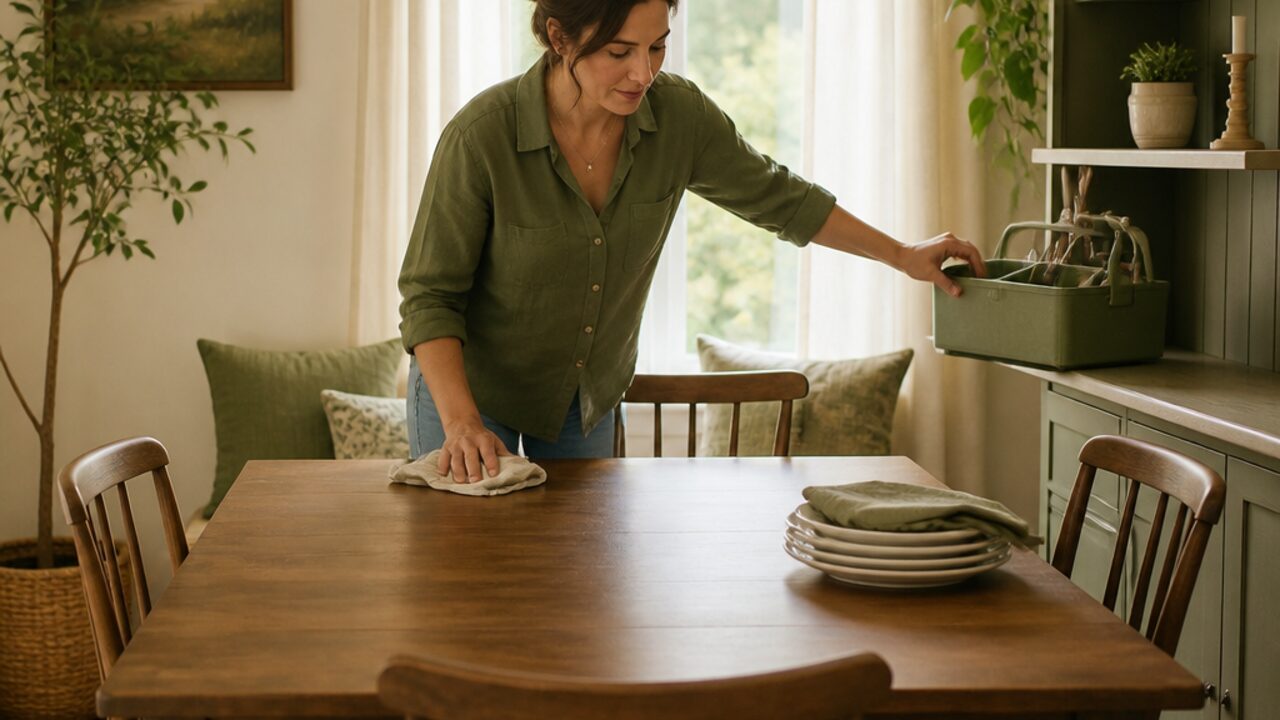
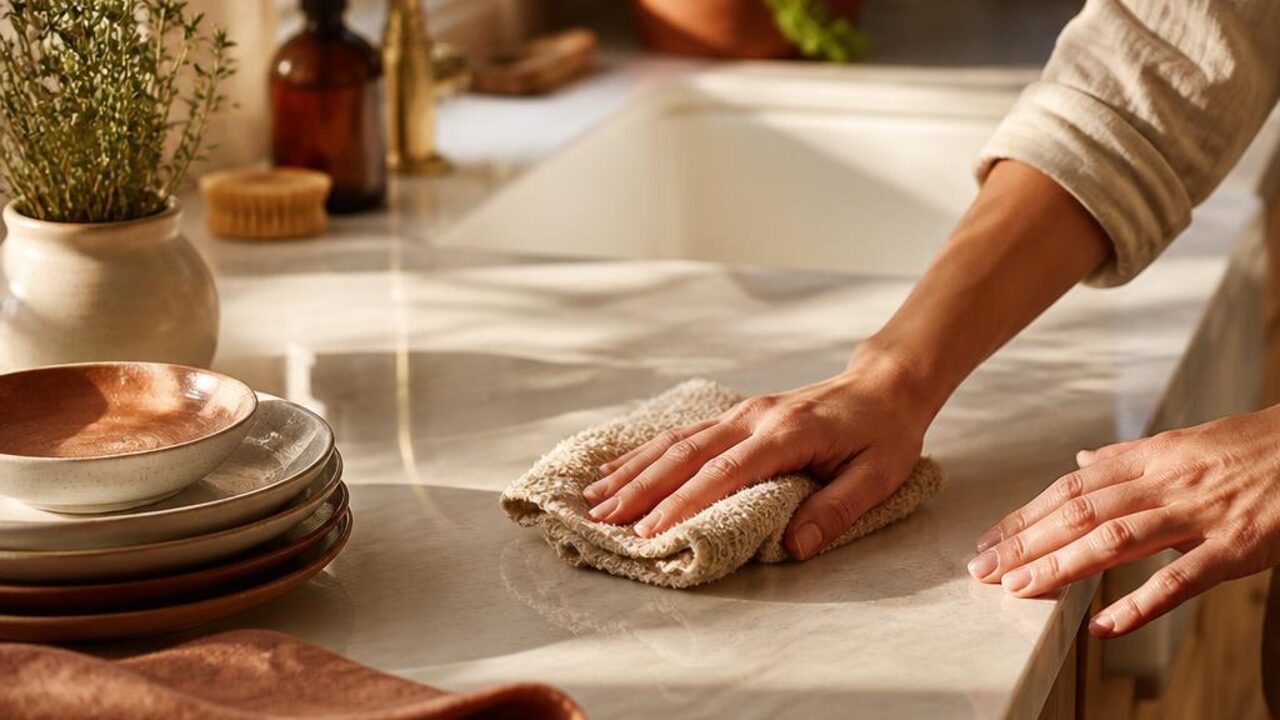
A useful ten-minute kitchen reset prepares the space for the next meal. Clear the surface you need, return a few essentials, deal with the dishes that block cooking, and notice one supply that needs attention. Then stop. The goal is a usable kitchen, not a spotless room or a cleaning schedule that takes over the week.
Choose the same short sequence each time so the reset becomes easy to begin. Adjust the order for your kitchen and household, but keep the finish line stable: the next person can cook, shop, or put food away without first solving yesterday's mess.
Define what ten minutes is for
Do not start with every job that could happen in a kitchen. Decide what the reset protects. It might be the counter used for preparation, the sink needed for washing, the floor around the cooking area, or the space where groceries are put away.
A compact reset can include:
- Clear one food-preparation surface
- Load or wash only the dishes that block the next meal
- Return frequently used items to their homes
- Wipe the surface that will be used first
- Check the refrigerator or pantry for one urgent item
- Empty a small bin if it is ready to go out
You may not complete every item in ten minutes. Treat the list as a sequence of options, not a demand to finish the whole kitchen.
Start with the next use
Ask what the kitchen needs to support next. If breakfast is first, clear the breakfast area and put the relevant items within reach. If dinner is next, make room for preparation and check whether an ingredient is missing. If the next action is unpacking groceries, clear a place to sort and store them.
This approach is more useful than cleaning by habit alone because it connects the reset to a real household need. A surface that is already usable does not need another pass just because it appears on a generic list.
The calm cleaning routine explains why cleaning tasks work better when their frequency matches their actual rhythm. Use the ten-minute reset for the small daily bridge between meals, not as a substitute for every recurring or deep-clean task.
Check supplies without starting a full inventory
While you reset, notice one item that could interrupt the next meal or shopping trip. Add a low staple to the grocery list, move an open ingredient where it can be seen, or note that a container needs replacing. Do not turn a ten-minute check into a shelf-by-shelf audit.
Use this quick supply scan:
- What is needed for the next planned meal?
- Is it already in the refrigerator, freezer, or pantry?
- Is the quantity enough, or does the list need an addition?
- Does an open item need to be used soon?
Lucru Home's pantry inventory can hold quantities and low-stock or expiry context. The kitchen reset simply gives you a practical moment to notice what should be updated.
Keep dishes and surfaces connected
Dishes and surfaces are not separate problems when the kitchen is being prepared for use. Clear the items that block the next action first. If everything cannot be washed, group the remainder safely and choose a later task rather than expanding this reset without limit.
Use the same definition of done each time. “Counter clear enough to prep dinner” is a finish line. “Make the entire kitchen perfect” is not. A stable definition makes the reset easier for another household member to take over.
Give recurring work its own home
Some kitchen tasks need a recurring schedule, such as cleaning an appliance, wiping a particular area, or checking a supply. Put those tasks in the cleaning system with the room and frequency that fit. The reset should not rely on remembering a different deep-clean job every day.
The room-by-room cleaning schedule can help assign broader care to realistic rhythms. Separate a daily usable-space reset from weekly, monthly, or seasonal work so the everyday version stays light.
Make it shared and easy to hand off
If more than one person uses the kitchen, write instructions that describe the useful outcome instead of one person's preferred method. “Clear the prep counter and add oats to the list” gives context without requiring a particular order for every item.
One person can reset while another checks the pantry or confirms tomorrow's meal. If the kitchen is already usable, skip the reset and use the time elsewhere. A routine is a support, not a test that must be passed.
End with the next meal in view
After ten minutes, name the next practical action and leave it there. It may be choosing a recipe, adding one missing ingredient, putting groceries away, or simply cooking. Do not add more cleaning because the timer ending feels too soon.
The reset succeeds when the kitchen is easier to use and the next decision is clearer. Explore the Lucru Home cleaning schedule to keep everyday kitchen care alongside the recurring work that should not depend on memory.