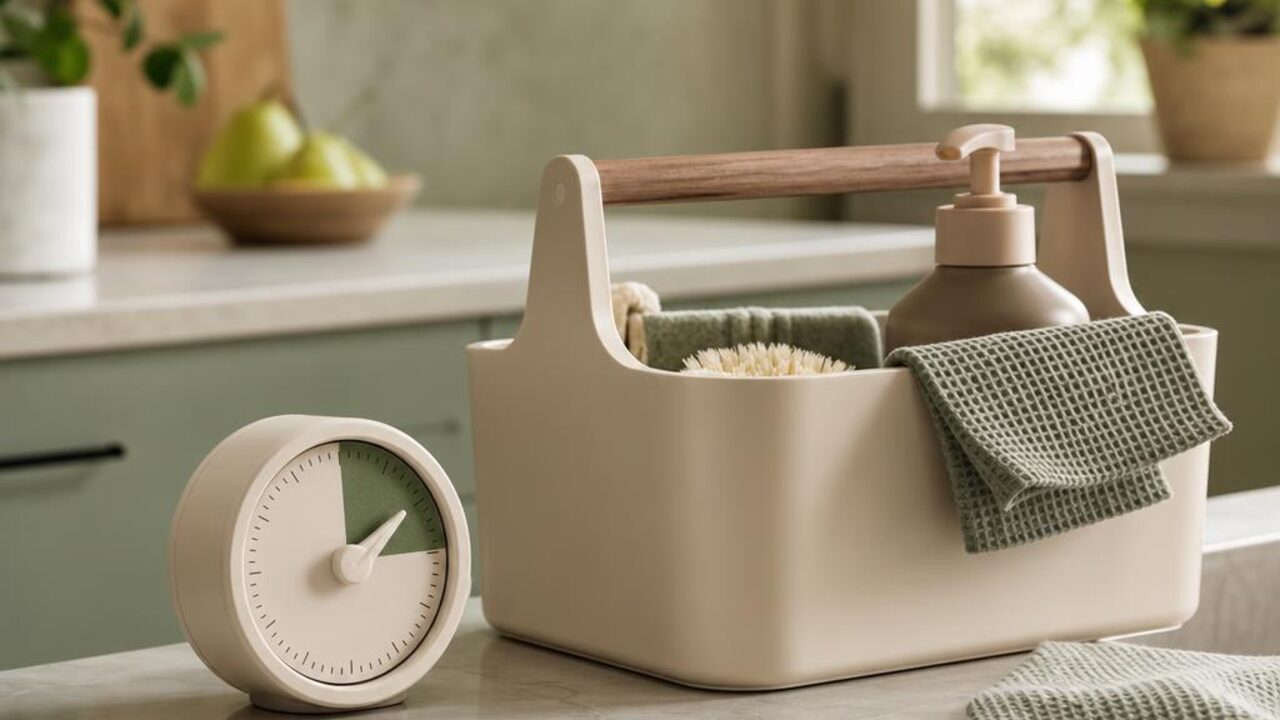
The 20-minute rule of cleaning means setting a timer for 20 minutes and cleaning one defined area until it ends. It is a practical way to begin when a whole home feels overwhelming, not a promise that every job can be finished in 20 minutes.
Use the time for visible, high-use surfaces or one contained zone. When the timer ends, either stop or make a deliberate choice to continue, rather than drifting into a much larger task.
Choose a boundary before starting
Name the area in concrete terms, such as the kitchen counter, one bathroom, or the entryway floor. Gather only the tools needed for that boundary so setup does not consume the session.
- Put away items that belong elsewhere
- Remove rubbish and recycling
- Wipe or vacuum the surfaces that are now clear
Work in a useful order
Start with items that block the space from being used. Then clean the surface beneath them. This sequence prevents repeated wiping and leaves a visible result even if the timer ends early.
For recurring tasks, adapt the cleaning between deep cleans guide. The guest-ready home reset can help you choose what matters when time is short.
Make the next session easier
Return supplies to one reliable spot and note the unfinished area without treating it as a failure. A 20-minute session can be repeated on another day or combined with a broader plan in the Lucru Home cleaning schedule.
The rule works best as a starting boundary. Some jobs need more time, drying time, or a different day, and that is useful information for planning rather than a reason to rush.
Apply the rule step by step
Make the decision about the job before starting the timer. For example, “reset the kitchen after dinner” is clear enough; “clean the kitchen” can expand into cupboards, appliances, and a floor that was not part of tonight's plan. Put a basket by the doorway for items that belong in other rooms, take out rubbish, and return only the items that have an immediate home.
Set out a cloth, the appropriate surface cleaner, and a vacuum or broom if the chosen area needs it. Start the timer only when the supplies are ready. Work through the visible sequence rather than switching between tasks:
- Collect dishes, rubbish, and items that belong elsewhere.
- Put away what can be returned in under a minute.
- Clean the cleared work surface according to its care instructions.
- Finish the floor or one final touch that makes the area usable.
If a basket is still full when time ends, leave it as a contained next task. Carrying it room to room can turn a focused reset into a long session of decisions.
Match the session to the day
The rule fits a weekday evening, a transition before leaving the house, or a low-energy day when beginning is the hardest part. It also works well when household members each take a different, small zone. One person might reset the bathroom while another clears the living room, provided both know what “done” means.
It is less suitable for work with a fixed safety or care process. Do not rush a product's label instructions, interrupt a task that requires supervision, or try to finish a large decluttering project just because the timer is running. For a bathroom with heavy buildup, a 20-minute session might be used to clear the counter and start one labeled cleaning step, while the detailed work is planned for another time.
Use a short closing routine
Spend the final minute returning supplies and deciding the first task for the next session. A note such as “vacuum sofa cushions Saturday” is more useful than leaving the vacuum out as a reminder. If the same area repeatedly remains unfinished, reduce the boundary or assign the task to a different cadence.
FAQ
Does the 20-minute rule mean I must stop?
No. Stopping is allowed, not required. The timer creates a decision point. Continue only if you have the time, energy, and supplies for the next clearly defined task.
What if I only have ten minutes?
Use the same approach with a smaller boundary, such as one counter, a sink, or a short pickup. A shorter session can still remove an obstacle from the next part of the day.
Can it replace deep cleaning?
No. Regular resets can reduce everyday mess, but detailed work still needs its own scope and schedule. Use the 20-minute rule to maintain momentum between those larger sessions.