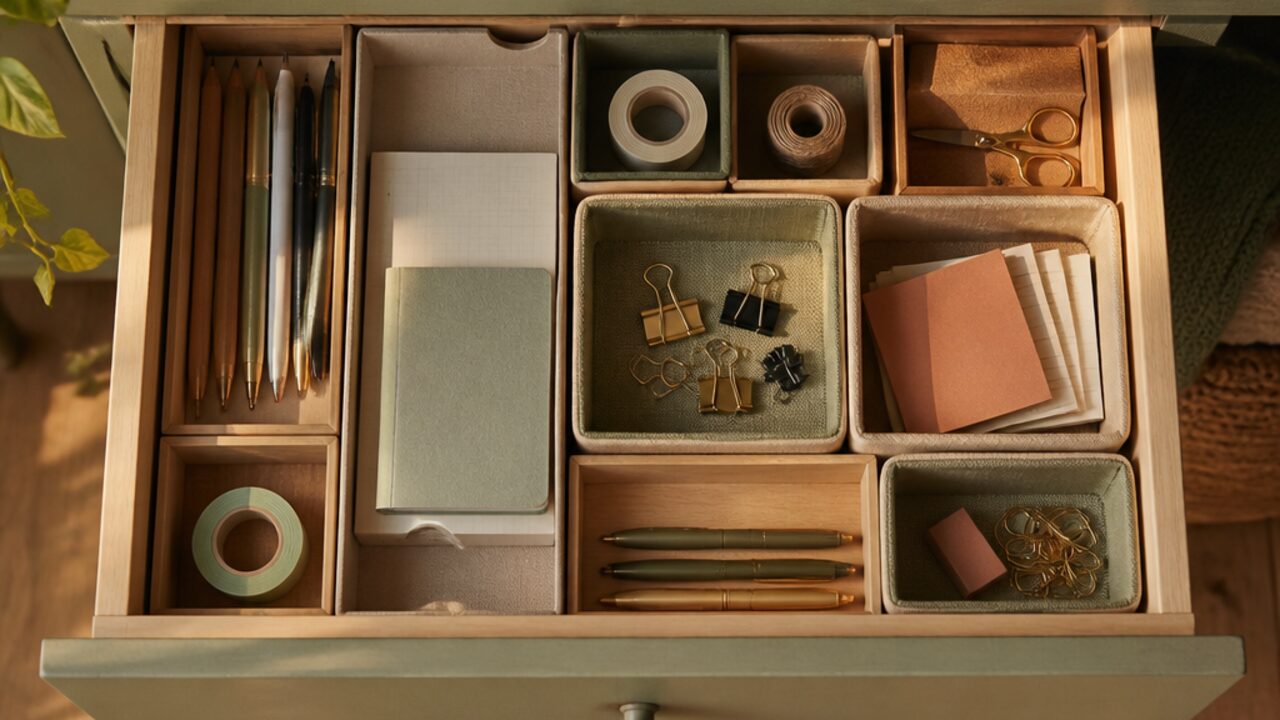
A shared utility drawer is easier to use when each everyday item has a visible space. Measure the drawer first, group only what belongs there, and use movable dividers so the layout can change instead of forcing every household into a fixed organizer.
Empty and measure one drawer
Take everything out and wipe the drawer before sorting. Measure its inside width, depth, and usable height. Keep a quick sketch or note so you can compare organizer sizes without buying by guesswork.
- Group items by task, such as writing, measuring, or opening packages.
- Remove objects that belong in another room or have no current use.
- Keep frequently used groups in the easiest-to-reach section.
- Leave a small amount of open space for items that shift between uses.
Choose movable sections
Use removable trays, adjustable dividers, or small containers that lift out for cleaning. Test the layout with the drawer nearly closed and opened fully. Avoid stacking items so high that the contents disappear beneath one another.
Agree on what belongs
In a shared home, label sections only when the label answers a real question. A permanent strip of tape can mark a shared category; a separate small tray can hold one person's personal items. The everyday access guide offers broader placement ideas, while the household command center guide covers a larger shared information area. Add one drawer reset to the Lucru Home to-do list.
Test the layout for a week
Put the organizer in place, then note which items still drift. Move one divider at a time after people have used the drawer, and keep the short measurement note for the next adjustment.