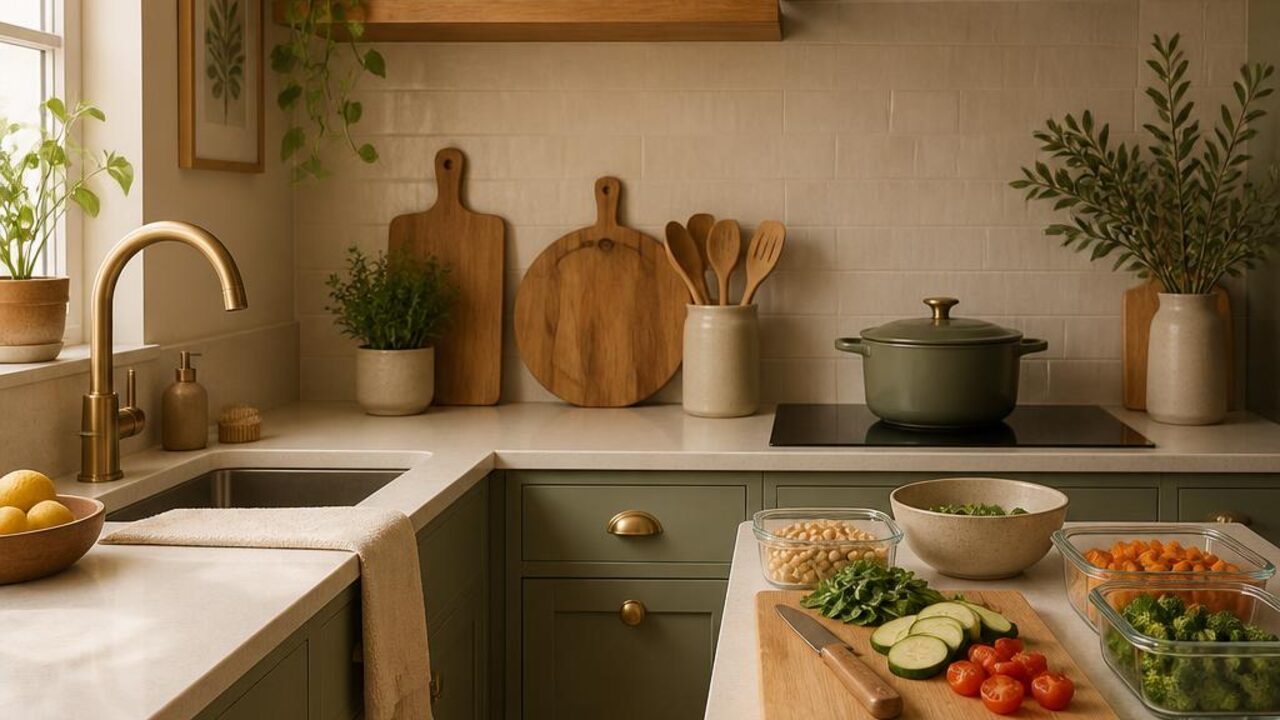
Cooking ahead in a small kitchen is possible, but the plan has to respect counter space, cookware, fridge capacity, and the order in which tasks happen. The goal is not to prepare a week of identical containers. It is to remove a few difficult steps from future meals.
Work in short batches and choose ingredients that can appear in more than one meal. A small kitchen rewards sequence more than ambition.
Choose a few components, not a full menu
Start with two or three components that can travel across meals. A cooked grain, washed greens, roasted vegetables, a sauce, or a prepared protein can become several different combinations. Leave some ingredients fresh so later meals do not all taste the same.
Before cooking, decide:
- Which component will be used first?
- What can be prepared with one pan or pot?
- What needs to cool before it is stored?
- How much space is available in the fridge?
- Which meal is flexible if the week changes?
Sequence the work around the space
Clear the counter before starting and keep only the tools needed for the current step. Begin with work that can cook or rest while you prepare the next item. Wash or reuse equipment between stages instead of setting out every bowl at once.
A compact sequence might be:
- Read the plan and clear one safe work surface.
- Start the longest cooking step.
- Prepare a second component while the first cooks.
- Portion or store only after food has cooled appropriately.
- Wash the active tools and reset the kitchen before stopping.
The order will change with the food and equipment. Follow product and food-safety guidance for cooling, storage, and reheating rather than treating a time-saving shortcut as a safety rule.
In a small kitchen, the best prep plan is the one that leaves enough room to cook tonight.
Store for decisions, not appearances
Label prepared food with what it is and when you made it, using the storage guidance that applies to the food. Put the first-use items where they are easy to see. If the fridge is already full, reduce the batch instead of creating a storage problem that makes the next meal harder.
Keep one component uncommitted. A container of cooked grains can become lunch, a side, or part of a soup. Flexibility is what protects the plan when a meeting runs late or a meal out appears.
Make the next meal obvious
Write one sentence for each prepared component: “grain plus vegetables for Tuesday lunch” or “sauce for the pasta night.” This small note turns preparation into a usable plan instead of a collection of containers.
The meal planning with limited kitchen space guide can help you choose a smaller menu, and the batch cooking without burnout guide covers sustainable portions. Put the finished plan in the Lucru Home meal planner.
Cook ahead to make future choices lighter, not to fill every shelf. A few useful components, stored clearly and used on time, are enough to change the shape of a busy week.