
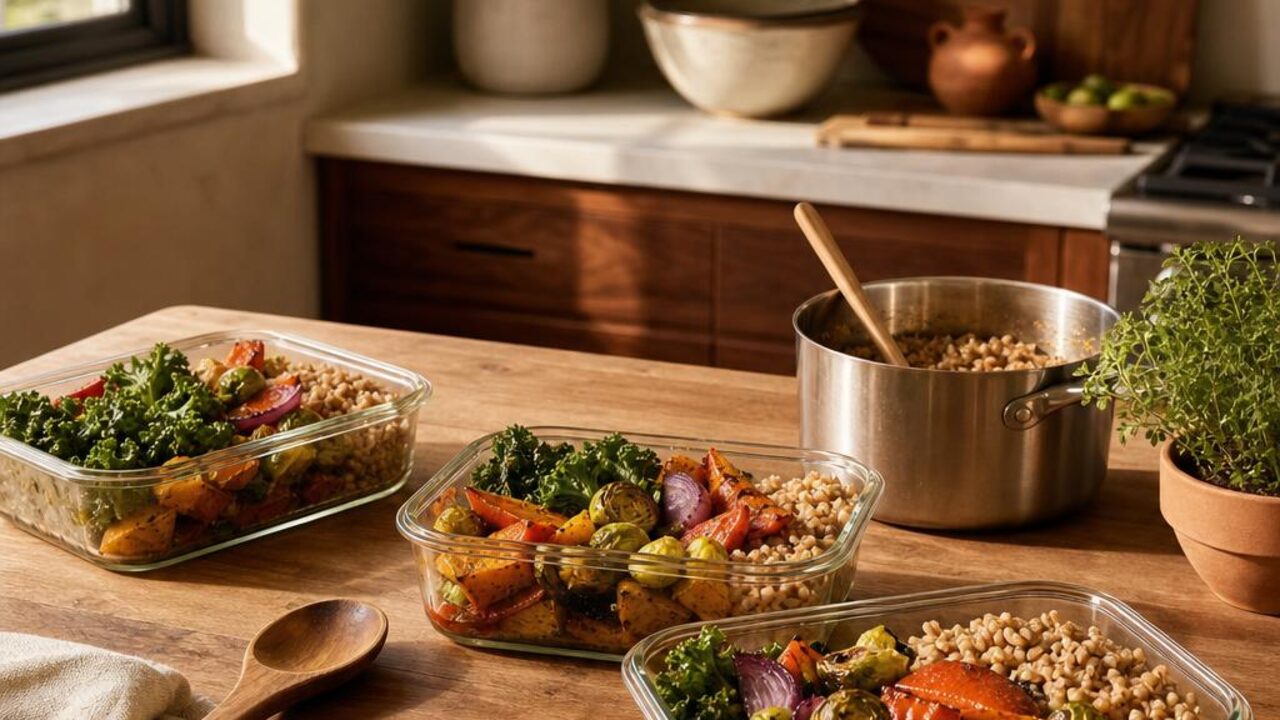
Batch cooking can sound like preparing seven identical meals in a single afternoon. That approach works for some households, but it is not the only option. A more flexible version prepares a few useful components that can become different meals throughout the week.
The point is to move effort away from the busiest nights without creating a second weekend job.
Pick the bottleneck first
Ask what usually makes dinner difficult. Is it chopping, cooking a protein, washing pans, or deciding what to make? Prep that bottleneck rather than preparing an entire menu.
You might roast a tray of vegetables, cook a pot of grains, wash salad greens, or make one sauce. Choose two or three jobs that will shorten several future meals. Stop before the session becomes exhausting.
Plan for different levels of energy
Build a small rotation:
- One meal that is nearly assembled
- One meal that needs a quick pan or pot
- One meal that can absorb leftovers
This gives you options when the household's energy changes. The meal prep guide for busy weeknights offers a similar low-pressure rhythm, while leftover meal planning can help give cooked food a destination.
Label the future you prepared for
Prepared food is easier to use when it is visible and clearly stored. Note what it is, when it was made, and what meal it was intended to support. Freeze anything that will not be used in time rather than hoping the week will become less busy.
Add the planned meals to Lucru Home and let the grocery list show only what is missing. At the end of the week, keep the components that genuinely helped and drop the ones that became another obligation. Batch cooking is successful when it gives future-you more choices, not when it fills every container in the kitchen.