Preparedness is easier to maintain when it is organized before the household needs it. A calm checklist does not try to predict every emergency or replace local instructions, medical guidance, legal advice, or advice from emergency professionals. It simply helps a household know where its important information is, what basic supplies need checking, and who will handle the first practical steps.
Use local authorities and qualified professionals for situation-specific guidance. Requirements vary by location and by household. The checklist below is an organizing framework, not a complete emergency plan.
Create a household information page
Start with a short page that a household member can find quickly. Include the information that is useful to your household, and keep private details protected:
- Household members and preferred contact methods
- Important family, neighbor, building, school, or care contacts
- Home address and access notes
- Utility or building service contact information
- Locations of key documents and supplies
- Pets or other care responsibilities
Do not put passwords, security codes, or unnecessary identity details in a general shared document. Use the secure place intended for sensitive information and share access only with the people who need it.
The household command center can provide the structure for making important household information findable. Keep the emergency section short enough that someone can use it under stress.
Map supplies without buying everything
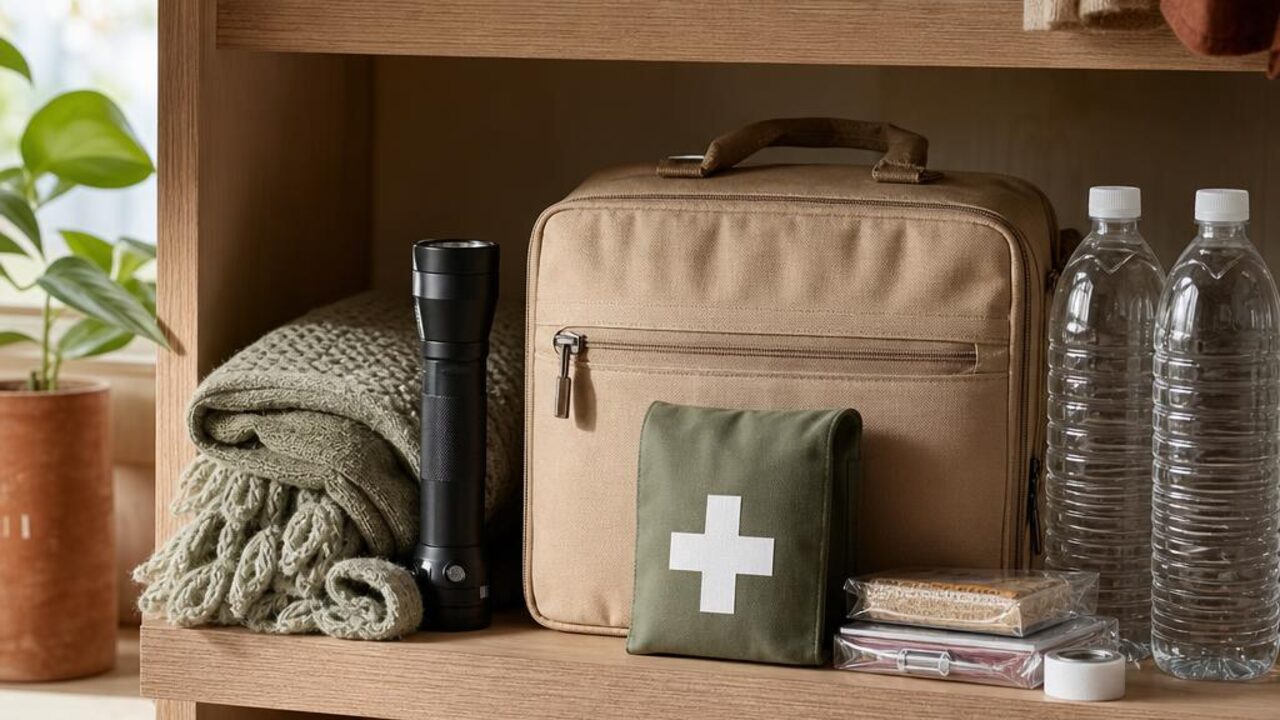
Look at what the household already has before shopping. Identify basic items needed for communication, light, water, food, sanitation, and any household-specific care. Follow relevant local guidance for quantities and special needs. Do not treat a generic checklist as a substitute for advice that applies to your location or health situation.
Use three labels:
- Present and usable
- Present but needs checking
- Missing or needs replenishing
Check batteries, expiry dates, packaging, and accessibility. Store supplies where the household can reach them and label the location plainly. If an item requires instructions, keep the instructions with it.
The household supply reorder points guide can help with the ordinary maintenance side of this work. A reorder point turns “we should replace that sometime” into a visible action without requiring a crisis to create urgency.
Assign first responsibilities
Preparedness often fails because everyone assumes someone else will act. Assign simple responsibilities by person and backup:
- Who checks on household members or contacts the agreed people?
- Who brings the information page and essential supplies?
- Who handles pets or other care needs?
- Who checks the home for the agreed safety steps?
- Who updates the calendar after a change?
Responsibilities may need to change depending on who is home. Keep the first version practical and revisit it when the household changes. Do not assign a task to someone who cannot reasonably access the information or carry it out.
Record review dates
Put a review date on the checklist. A quarterly or seasonal review may be enough for some households, while medication, food, batteries, or care needs may need a different rhythm. The date is a prompt to check, not a claim that everything is permanently current.
At each review, ask:
- Have contacts, addresses, or household members changed?
- Are supplies accessible and still usable?
- Do responsibilities still make sense?
- Is a key document stored where the index says it is?
- Did local guidance change what the household should do?
The seasonal home maintenance checklist offers a natural place to pair these reviews with other household checks. Keep the emergency review distinct so it does not disappear inside a long seasonal list.
Turn gaps into ordinary tasks
Do not leave the checklist as a document that records problems. Convert each gap into one small task: replace batteries, confirm a contact, label the supply box, or ask a professional a specific question. Add a due date when it matters, and close the task when the item is actually handled.
The to-do list is a practical home for those actions. Keep the task title specific and avoid copying sensitive details into it. A short task can point back to the protected information page.
Practice the finding, not the fear
Once the checklist exists, make sure household members know where it is. A quick walk-through is enough. Find the information page, show the supply location, and confirm who would handle the first handoffs. The purpose is familiarity, not a dramatic rehearsal.
Preparedness is ongoing organization. Keep contacts findable, supplies visible, responsibilities assigned, and review dates ordinary. Leave professional emergency, medical, and legal decisions to the appropriate guidance, and use the household checklist for the part you can control: knowing where to start.