Mail becomes clutter when every envelope is treated as something to decide later. A simple routine gives incoming paper one landing spot and three next steps: act on it, file it, or recycle it. Handle sensitive documents carefully and use the secure disposal option available to your household when needed.
Choose one intake spot
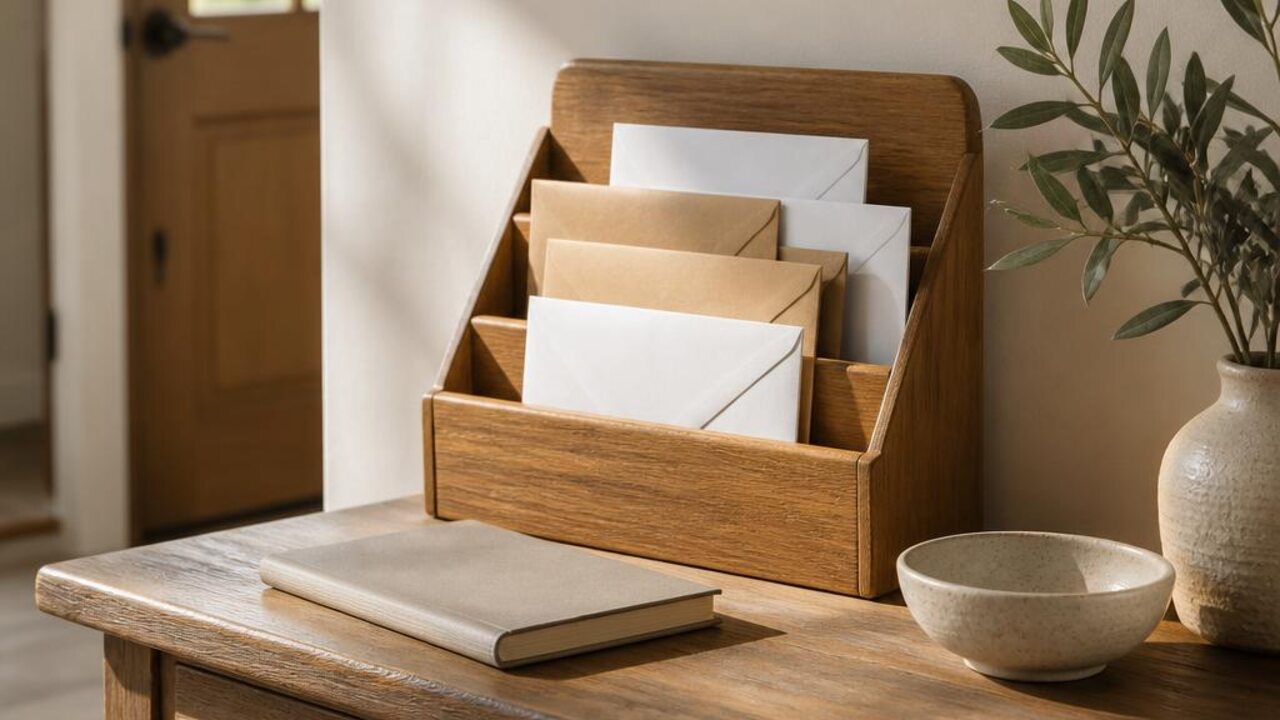
Pick a small tray or folder near the usual entry point. Use it for mail that has arrived but has not been reviewed, not as permanent storage. Keep the space separate from school papers, receipts, and documents that already have a clear home.
Choose a regular time to sort the tray, such as after the weekly household review. If a deadline is visible, move the item to the action list immediately rather than trusting that you will remember it later.
Sort into three next steps
Open only what you need to decide the next action. Then use a short sequence:
- Add an action or due date to the household list
- File documents you need to retain in the right folder
- Recycle ordinary paper that no longer needs attention
Do not leave account details or personal information exposed in a shared area. When another household member needs a document, agree on who will handle it and where the original belongs.
Review what keeps arriving
Once a month, notice which papers repeat. If a statement, notice, or flyer no longer needs to arrive by mail, use the provider's own settings to change the delivery preference. Keep the change limited to the services you actually use and retain any records your household needs.
The household information hub helps keep shared references current, and the paperwork routine for home life covers broader document organization. Put deadlines in the Lucru Home to-do list.
One intake spot and a short weekly sort keep mail from becoming a second filing cabinet on the kitchen counter.