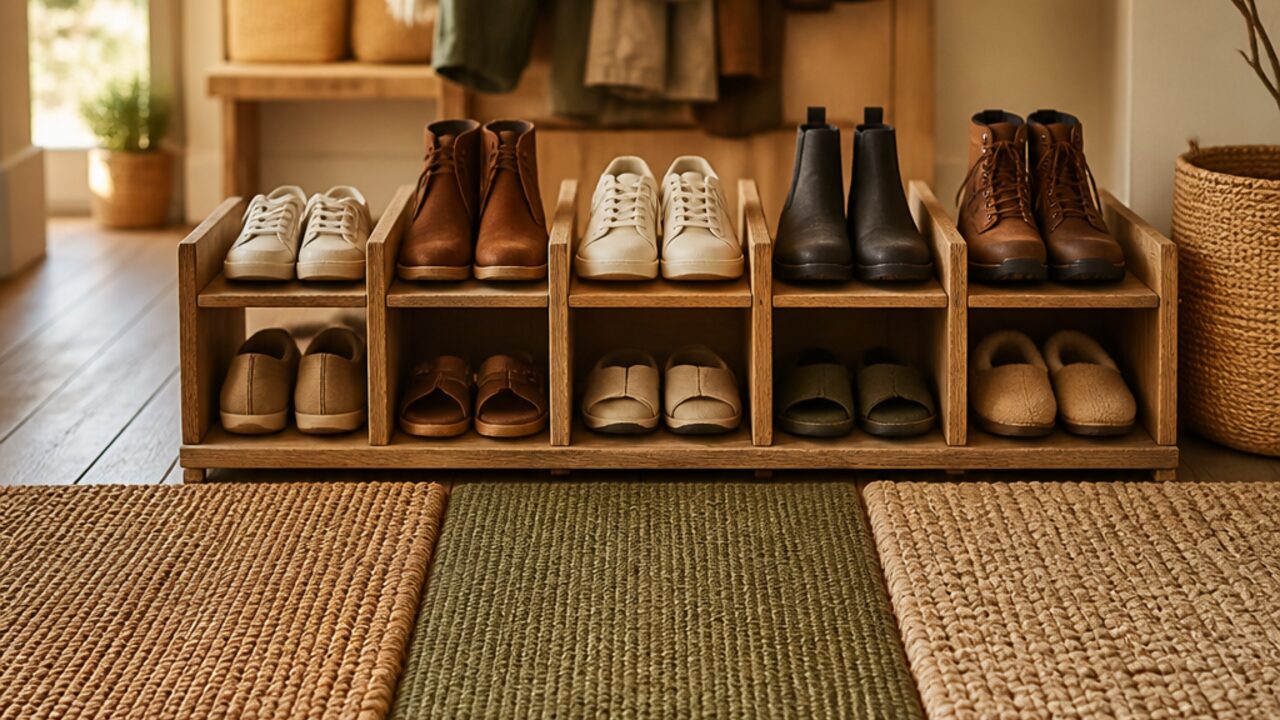
A shared shoe area is easier to use when people can recognize their own zone at a glance. Give each person a shelf, mat, or small section of a rack, then decide what happens when that space is full. A clear boundary works better than expecting everyone to sort a mixed pile each day.
Mark the zones
Use different shelf positions, washable mats, or simple picture-and-name tags. Keep the cues consistent and visible from the entry. If a household member benefits from a tactile cue, choose a distinct mat texture or a fixed shelf edge, and ask that person whether the cue is useful.
- Keep one shared space for shoes waiting to be returned.
- Make zones large enough for the usual number of pairs, not every pair owned.
- Leave a path clear through the entryway.
- Store occasional-use footwear elsewhere in its normal seasonal place.
Set a small reset rule
Agree what happens when shoes are left in the common area: return them to their zone, or place them in the waiting spot for the next household reset. Avoid adding a complicated color code when a simple shelf assignment is enough.
The entryway reset routine covers the daily drop zone, and the seasonal activity gear reset helps when shoes belong to a specific activity season. Add a short follow-up to the Lucru Home to-do list.
Start with one shelf
Clear a single shoe shelf, assign each person one visible section, and agree how many pairs fit there. Check after a week whether the zones are easy to recognize and adjust only what is confusing.