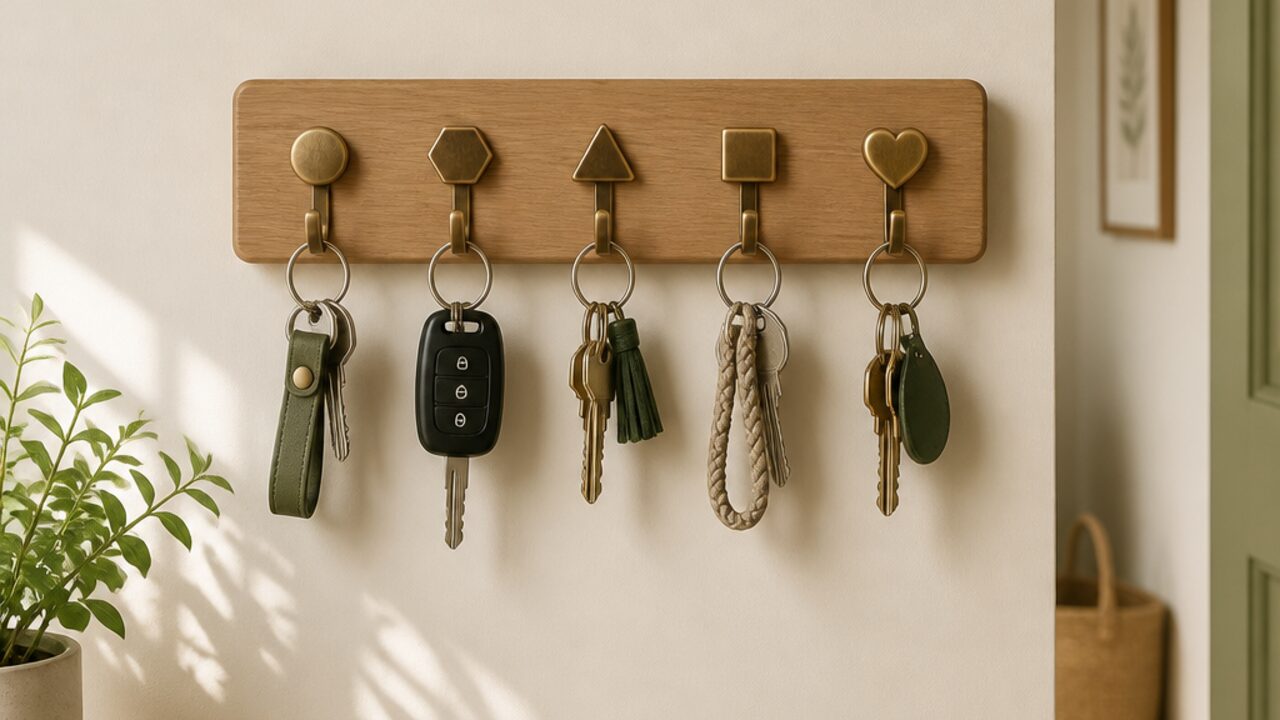
A key rail is easier to use when every everyday set has one predictable place. Arrange the hooks in a simple order, give each a short name or icon, and agree which keys belong on the rail. This guide is about returning keys to their usual spot, not sharing access or deciding who should hold a key.
Choose simple identifiers
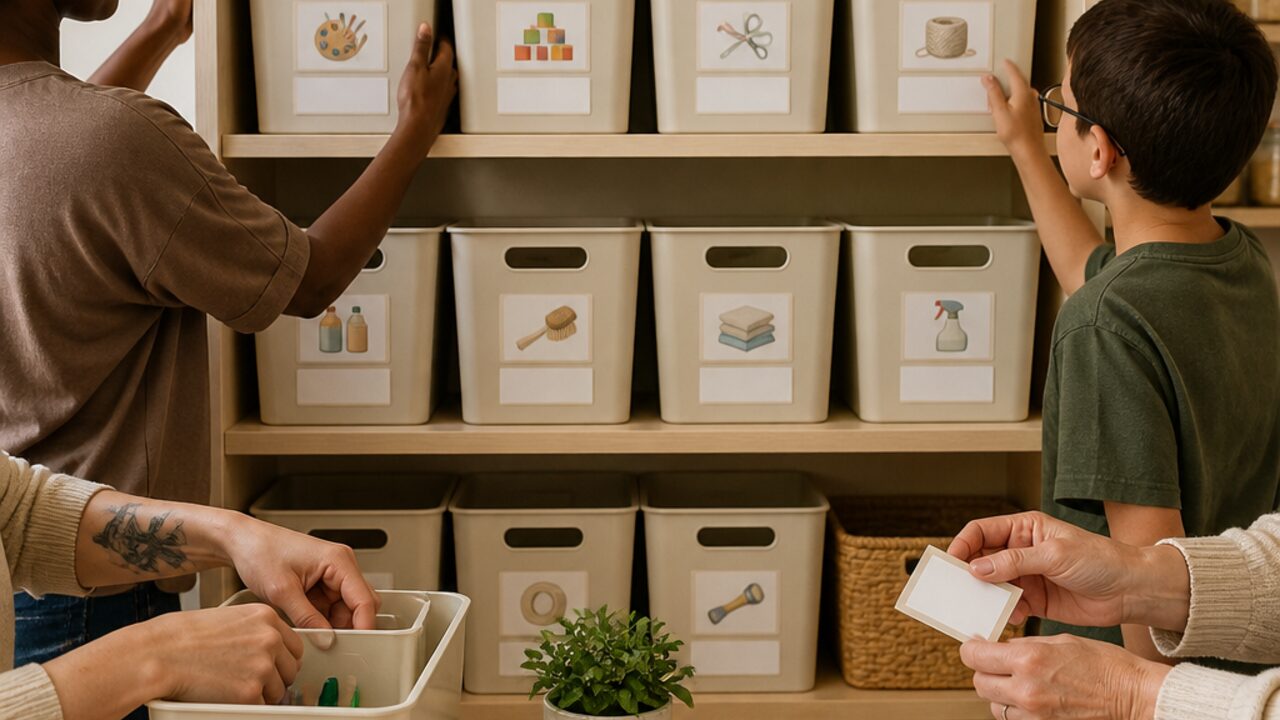
Use a plain label such as “car” or “bike lock,” or a familiar icon paired with a word. Keep each tag attached to its own ring. If several people use similar keys, choose descriptions that distinguish the sets without exposing private information to visitors.
- Start with keys used at least weekly.
- Leave unused hooks open instead of filling them for appearance.
- Place the rail where household members naturally arrive.
- Keep other important keys in their existing designated place.
Make the placement consistent
Pick a left-to-right order and do not change it casually. If one hook sits lower for a person who needs easier reach, make that difference intentional and familiar to everyone. Keep the labels legible from the usual standing or seated position.
The shared household key handoff plan addresses who carries a key when plans change. The daily essentials landing zone can help keep the key rail separate from bags and mail. Put a reminder on the Lucru Home home-management app for the first week.
Add only the keys people use
Choose one common key ring, give it a clear hook and label, then ask household members to try the layout for a week. Adjust the placement once based on actual use, not guesswork.