A household change often reveals itself in the supply cabinet. Breakfast disappears faster, laundry happens on different days, or a product that used to be essential is no longer used much. Buying from an old list can create duplicates and leave the things you actually need out of reach.
The answer is not a larger stockpile. It is a short review tied to the routine the home has now.
Audit one cabinet at a time
Choose the supply area that causes the most last-minute trips and sort it into three groups:
- Used every week and worth keeping visible
- Used sometimes and worth storing with a clear label
- No longer useful or already overstocked
Note the normal quantity and the next time you expect to need it. You do not need exact predictions. A rough reorder point is enough to stop the household from discovering an empty shelf during a busy day.
Connect supplies to real routines
Ask what changed:
- Are there more or fewer people eating at home?
- Did the cleaning or laundry rhythm move to a different day?
- Does a new work or school schedule require different grab-and-go basics?
- Which supplies can be shared across rooms instead of duplicated?
In Lucru Home, pantry and grocery items can be reviewed together with planned meals. For household supplies, a recurring to-do or a low-stock note is often enough. Keep the system visible to the people who use it.
A well-run supply cabinet is not full. It is predictable.
Set a calm reorder rhythm
Pick one weekly or monthly moment to check the short list. Use this sequence:
- Check what is open, low, or unused
- Compare it with the next two weeks of routines
- Add only what is likely to be needed
- Use older stock first when it is still suitable
- Close items that no longer belong in the home
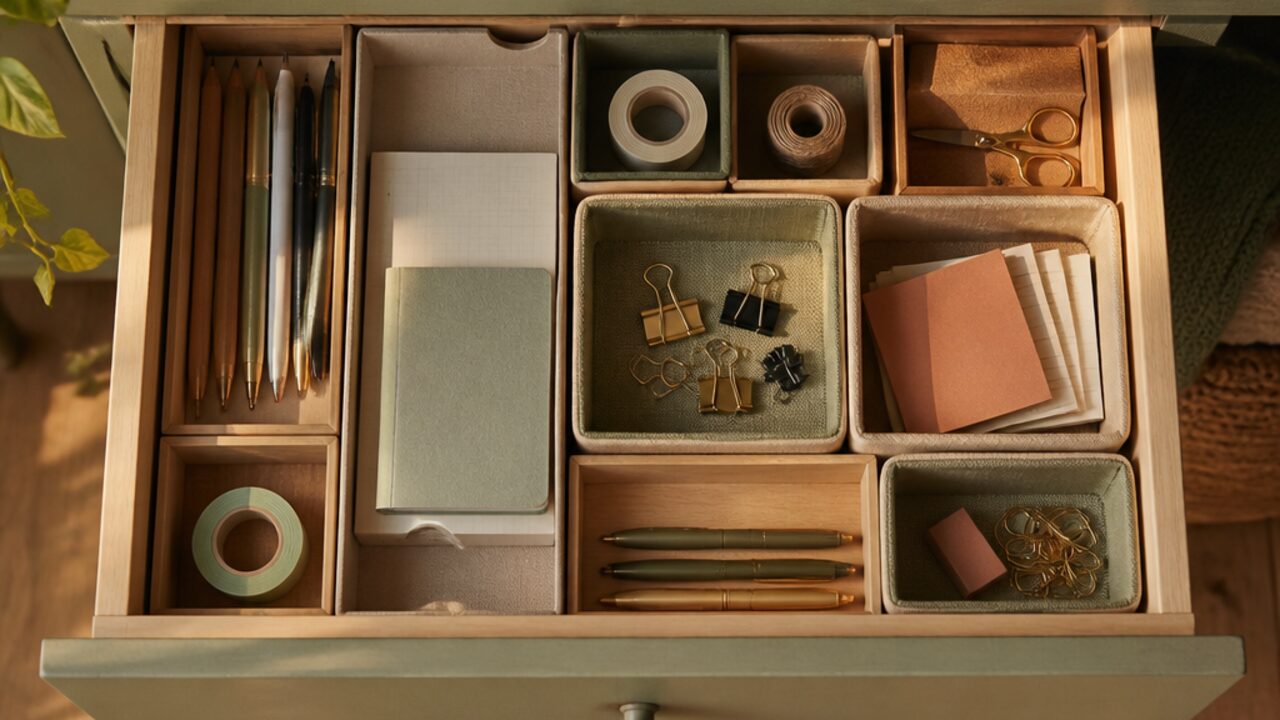
The household supply reorder points guide helps set practical thresholds, while the household supply cabinet organization guide covers the physical setup. Keep the active list in the Lucru Home pantry when the items are food, and in the Lucru Home grocery list when they are ready to buy.
Review after a month and adjust from what the household actually used. Small corrections will keep the cabinet useful without turning it into another project.