Household tools are easier to use when common items have a consistent home and an active project does not spread across every shelf. Organize around the tasks you actually do, not an ideal workshop you may never have. Use storage that suits the tools and the space, and follow manufacturer guidance for safe handling and storage.
Separate everyday tools from project supplies
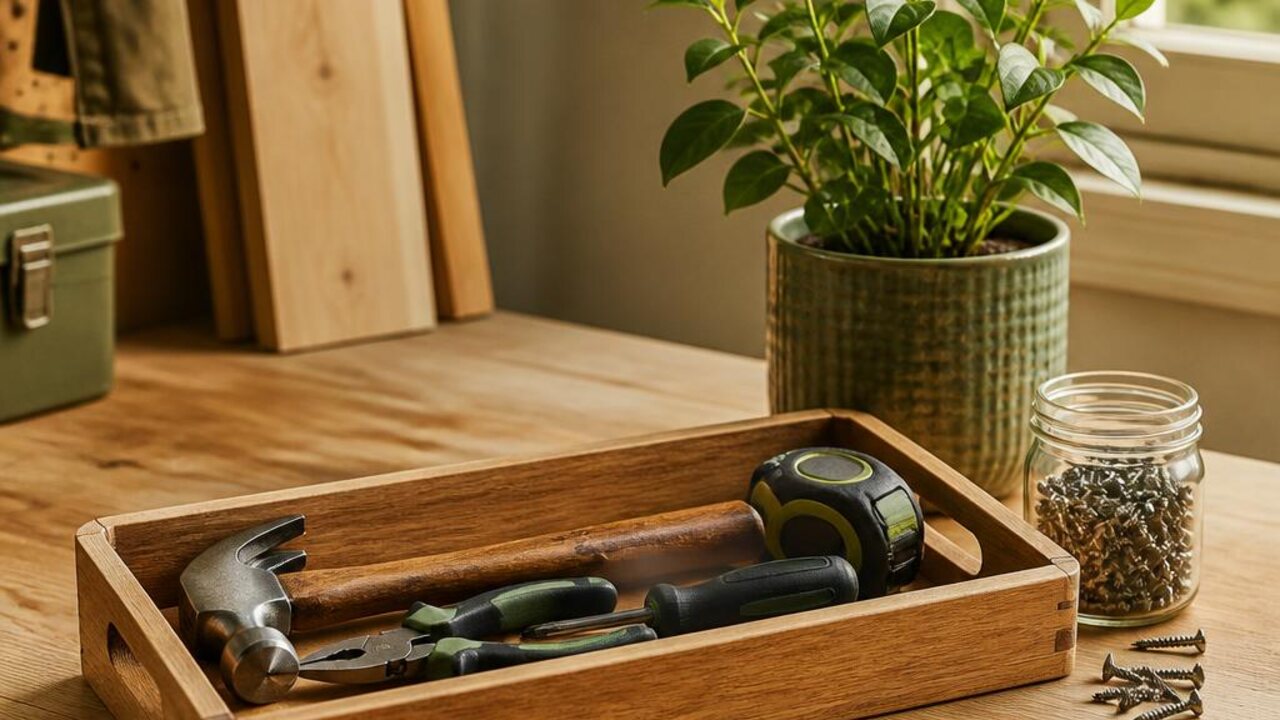
Gather tools from drawers, closets, and temporary piles. Group everyday items together, then keep supplies for a current project in a separate tray or container. This makes it easier to see what is available without confusing an unfinished project with the household's general tool supply.
Avoid buying storage before you know what you need to keep. Check for duplicates, missing parts, and items that no longer work. If an item needs repair or disposal, follow the appropriate product or local guidance rather than leaving it in the usable tool area.
Give each group a clear return place
Use a label, outline, or container that makes the storage location obvious. Put heavier items where they can be reached safely, and keep sharp or hazardous tools secured from children and pets. Store chemicals and materials according to their labels.
- Keep a small everyday set together
- Use one container for the current project
- Return tools after each work session
- Note supplies to replace before starting another project
The home project materials checklist helps prepare a project list, and the home project closeout checklist covers the return-to-storage step. Track the next project task in the Lucru Home to-do list.
A tool area is organized when a household member can find and return the tools without a new search. Keep the categories broad, protect safe storage, and reset the project tray when the work is done.