Meal planning on a small grocery budget is less about finding the cheapest version of every ingredient and more about reducing waste and extra decisions. Start with food you already own, choose meals that share ingredients, and leave enough flexibility for leftovers and busy nights.
The goal is a week that feels possible. A plan that uses every item exactly once may look efficient but can be harder to cook than a short rotation with ingredients that appear in more than one meal.
Start with the food already at home
Before opening a recipe search, check the pantry, fridge, and freezer. Look for ingredients that need using, staples that can form a base, and partial packages that can join another meal. This first pass prevents a budget plan from quietly becoming a second pantry.
Write down:
- Perishables that should be used early in the week
- Open packages that can finish a meal
- Staples that can stretch a recipe
- Freezer items that can replace a planned purchase
- Ingredients that are genuinely missing
Build around flexible meal shapes
Choose meal formats that accept substitutions instead of recipes that depend on one precise shopping list. A soup, grain bowl, pasta, tray meal, or filled flatbread can change with the vegetables and proteins available.
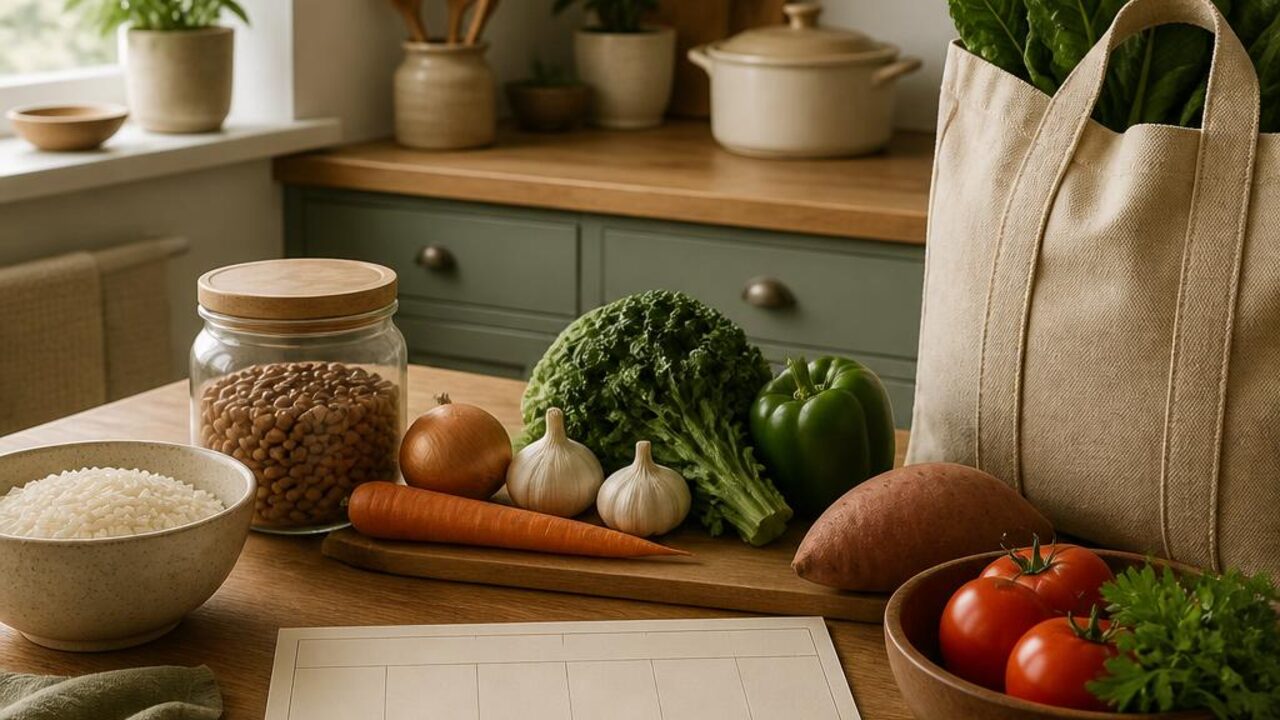
Plan two or three anchor meals, then reuse components in a different form. Cooked grains can become a bowl or a soup addition. Roasted vegetables can join lunch. A sauce or dressing can make leftovers feel intentional rather than repeated.
A budget meal plan is not a test of restraint. It is a way to make each purchase useful more than once.
Leave room for the week you actually have
Do not fill every dinner slot with a recipe that requires cooking from scratch. Include a leftover night, a pantry meal, or a very short option. This protects the budget from the expensive choice that appears when the plan asks too much at the end of a long day.
A simple planning sequence is:
- Choose one or two meals that use the most perishable food.
- Add a flexible pantry meal and a leftover night.
- Pick one meal that freezes or reheats well.
- Check prep time against the real week.
- Build the grocery list only after the menu is stable.
Shop from a list with a stopping point
Group the list by store section and mark what is already at home. Set a stopping point before shopping, such as the ingredients needed for the planned meals plus a small allowance for fresh basics. A list is easier to follow when it distinguishes essentials from nice-to-have extras.
The grocery list for a budget can help with the shopping step, and the leftover meal planning guide shows how to give extra portions a clear place in the week. Put the menu into the Lucru Home meal planner so the plan and list stay together.
Review what worked after the week ends. Keep the meals that were affordable and easy to repeat, adjust the ones that created waste, and let the next plan get simpler rather than more ambitious.