A flexible meal rotation is a short list of meals and meal patterns you can return to without serving the same dinner every week. Keep dependable options for busy nights, rotate flavors and ingredients, and leave open space for leftovers or plans outside the home.
The system works because it replaces a blank week with a handful of starting points. It is a menu of possibilities, not a rule that every Tuesday must look the same.
Build the rotation from real favorites
Start with meals your household already cooks and enjoys. Do not begin with aspirational recipes that require unfamiliar ingredients or a free evening you rarely have. Sort the list by effort, not just cuisine:
- Very quick meals for late or low-energy nights
- Flexible meals that absorb vegetables or leftovers
- Reliable family favorites
- A slower meal for a night with more time
- Pantry or freezer meals for a change of plan
Aim for enough variety that the list feels useful, then stop. A small rotation is easier to remember and improve than a catalogue that takes longer to search than dinner takes to cook.
The weekly meal planning guide shows how to use a rotation while keeping a night or two flexible.
Think in patterns, not fixed recipes
A pattern gives you a structure while allowing the ingredients to change. A grain bowl can use different vegetables, a soup can follow the season, and a tray bake can adapt to what needs using. This keeps the grocery list focused without making the week repetitive.
For each pattern, write down a few dependable combinations and one substitution. A recipe should make the next step easier, not force a special shopping trip every time. Lucru Home's recipe library can keep the repeatable meals together with prep time, servings, and tags.
Share ingredients across the week
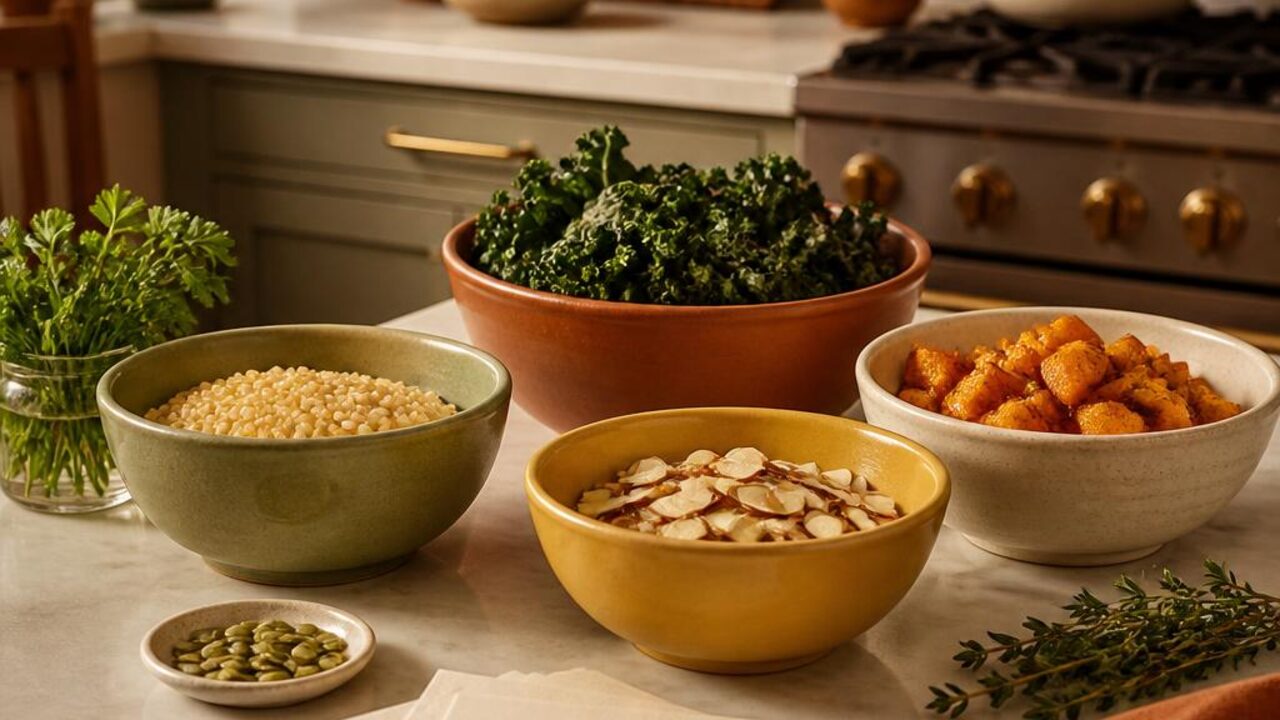
Choose meals that use overlapping ingredients when that helps your household. A bunch of herbs, a cooked grain, or a container of roasted vegetables can support more than one dinner. Shared ingredients reduce the number of items waiting for a single recipe and make leftovers easier to plan.
Check the pantry before shopping. If a rotation meal needs one missing ingredient, add that item rather than rebuilding the entire list. The flexible meal prep guide covers how to prepare components without committing to identical meals.
Give every week an escape hatch
A rotation should include a fallback for each kind of interruption. Keep one fast meal for late nights, one freezer or pantry option, and one leftover night. If plans change, move a meal instead of treating the calendar as a promise.
Use a simple weekly structure such as:
- Two dependable favorites
- One flexible pattern
- One leftovers night
- One quick fallback
- One meal with room for more preparation
Adjust the balance to your household. The important part is having options that match the energy and time you expect.
Refresh it without starting over
Every few weeks, remove meals that are consistently skipped and add one new option. Notice which ingredients are wasted, which meals reheat well, and which prep steps genuinely help. A rotation gets better through small edits.
Keep variety inside the structure
Variety does not require a brand-new recipe every night. Change the seasoning, side, cooking method, or ingredient within a familiar pattern. A dependable bowl can become a warm meal in one week and a cold lunch the next. A roast vegetable component can support a grain bowl, a wrap, or a simple plate. These small changes keep the rotation from feeling like a fixed menu while preserving the planning work.
Ask the household which meals feel dependable and which feel like obligations. Make room for different appetites and schedules without creating a separate plan for everyone. A rotation should reduce decisions, not remove choice.
Plan the meals in Lucru Home, let the connected grocery list collect ingredients, and use your pantry view to avoid buying what is already on the shelf. Open the Lucru Home meal planner to turn a short rotation into a practical week.