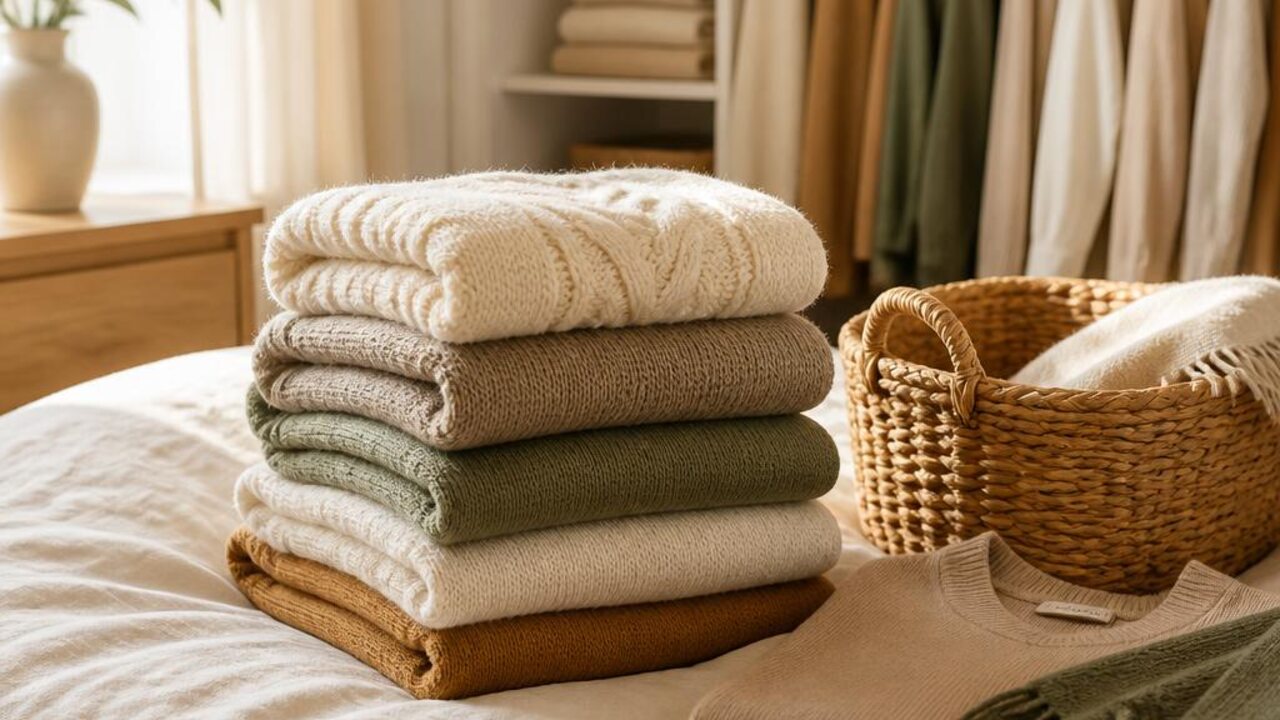
A seasonal clothing swap does not need to become a full closet makeover. Work in one section at a time, move only clothing that is genuinely out of season, and make the stored items easy to identify later. The best system is the one that leaves everyday clothes visible and does not require a second round of sorting.
Start with one zone
Choose a rail, drawer, or shelf rather than emptying the whole closet. Separate the items you wear now from the clothes that belong to another season. If you are unsure whether something still fits your life, set it aside for a later decision instead of rushing to donate it.
Before storing anything, make sure it is clean and fully dry, following the garment's care label. Keep delicate or special pieces in a suitable container and avoid packing clothes so tightly that you cannot find what is inside.
Label by season and category
Use a simple label such as "warm-weather layers" or "winter accessories." Store like with like, and keep a short note if an item is in a different location. This is especially helpful in a small home where seasonal clothing may share space with linens or household supplies.
- Keep frequently used transition pieces within reach
- Store a small amount of clothing you may need during a weather change
- Note items that need repair or a button before the next season
- Avoid buying storage containers until you know what must fit
Review before the next swap
When the season changes again, open one container at a time. Return useful items to the closet, set aside pieces that no longer fit your needs, and update the label before storing anything. A brief review prevents the system from accumulating mystery bags.
The home declutter guide helps with decisions about what to keep, and small-space home management offers ideas for limited storage. Add a reminder to the Lucru Home to-do list.
Keep the swap small and repeatable. A clear label and one manageable zone will do more for an everyday closet than reorganizing every shelf at once.