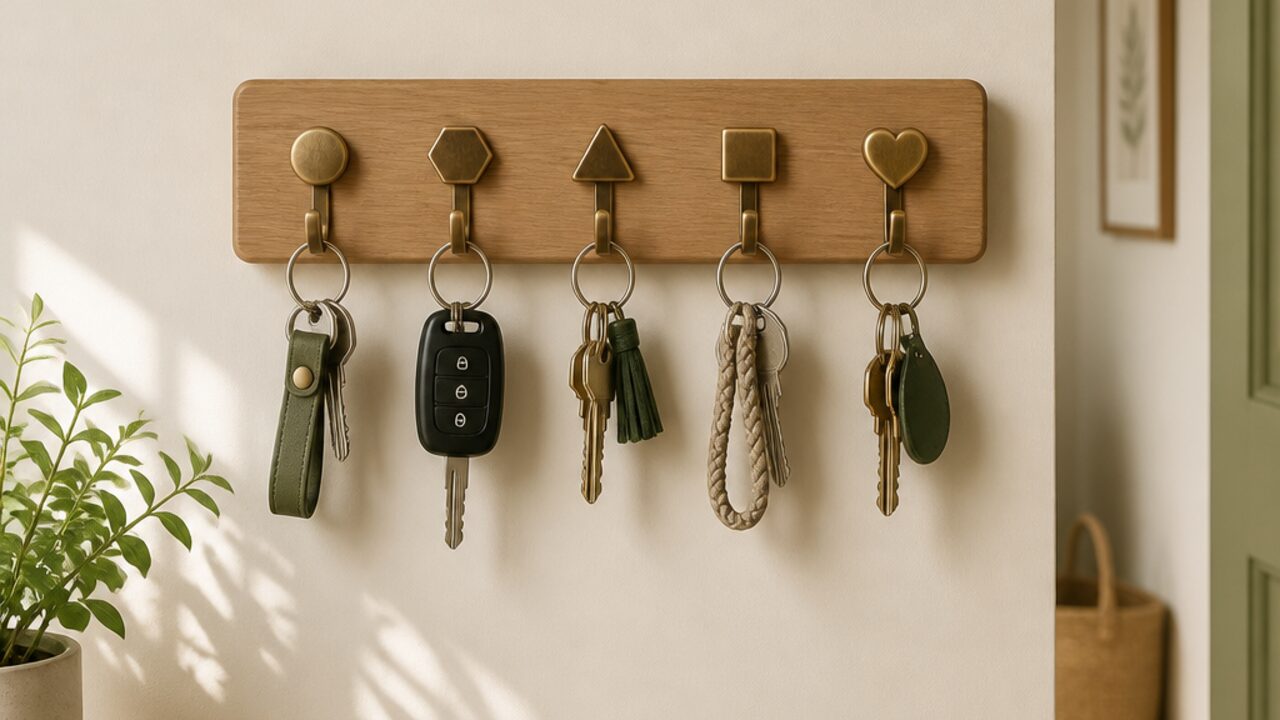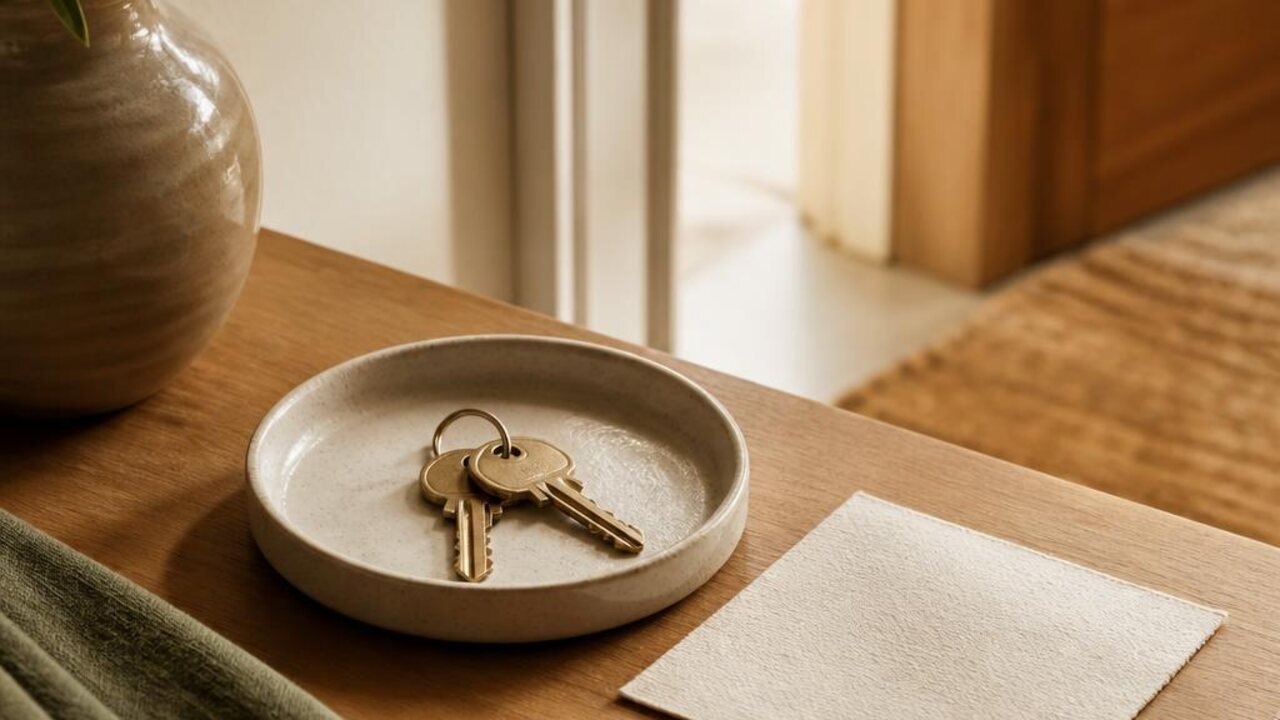
A household key handoff works best when the person borrowing a key, the purpose, and the return plan are clear. Keep the system small: agree on who may hold a spare, where it is normally kept, and how to update the household when plans change. Share access only with people the household has agreed to trust.
Decide what the household needs
List the everyday keys and access items people actually share, such as a spare front-door key or a key for a common storage area. Do not record security codes or sensitive access details in an open household note. Store those according to the method your household trusts.
Agree on who can lend a spare and when it should be returned. A guest's visit, a pet-sitting arrangement, and a regular household member may need different handoffs. Make the plan fit the situation rather than creating a detailed registry for every key.
Make handoffs easy to close
Use one visible note or shared task for a temporary loan. Include the borrower's name, the reason, and the date to check that the key has come back. Keep the note private to the people who need it, and remove it after the handoff is complete.
- Label keys in a way household members understand, without writing the address on them
- Tell the borrower how and when to return the key
- Confirm the return rather than assuming it happened
- Update the plan if someone moves out or an arrangement ends
The household information hub can hold the general household reference, while household task handoffs offers a useful model for assigning and closing shared tasks. Track a temporary reminder in the Lucru Home to-do list.
A short, private record and an explicit return plan are enough for most homes. Make one person responsible for closing each temporary handoff, then clear the note when the key is back.