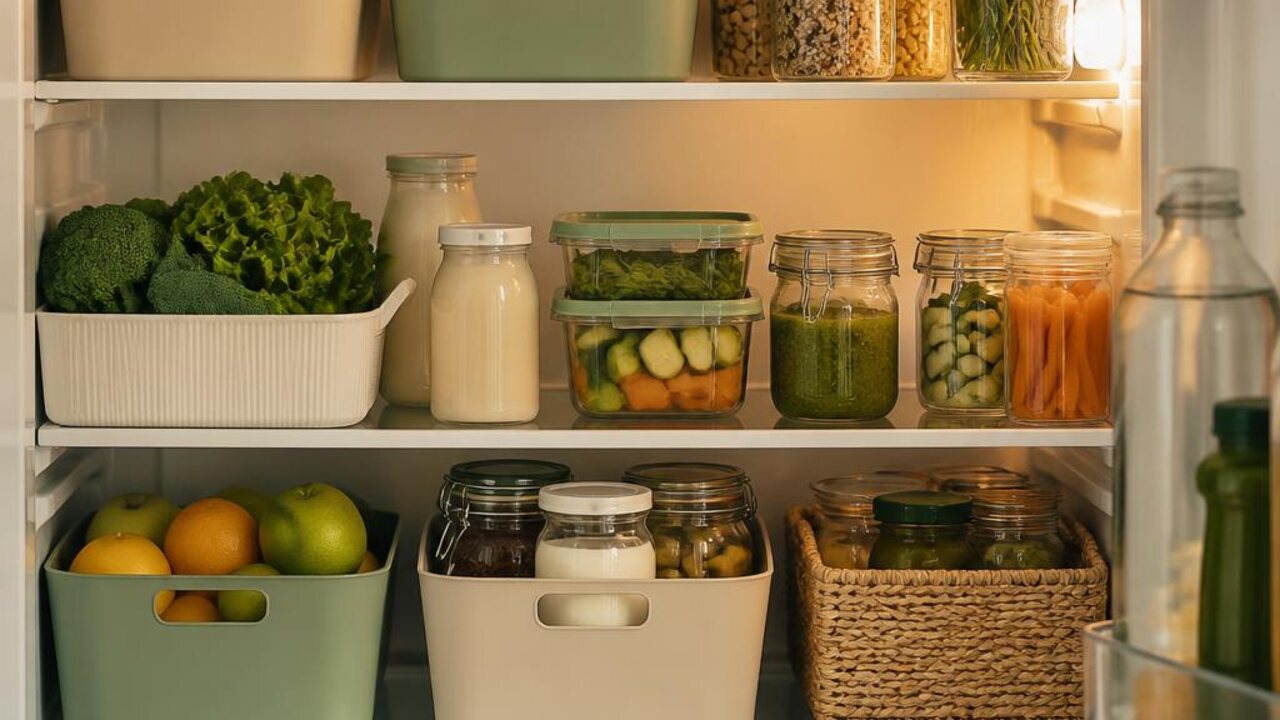
A shared kitchen can become confusing when nobody knows whether an ingredient is communal, personal, or set aside for a recipe. A small labeling agreement is more useful than expecting everyone to guess. Keep the language neutral and make sure people can change the arrangement together.
Agree on a few categories
Start with only the categories your household needs. For example, use "shared," "personal," and "planned meal." Choose labels that are easy to remove and do not damage containers. Decide whether unmarked items are shared or should be left alone, rather than leaving the rule implicit.
- Label the shelf or bin as well as individual items when useful
- Include a date for food set aside for a specific meal
- Keep personal items in an agreed area
- Revisit the system if it creates extra work
Connect labels to the shopping list
Before a shared shop, review the common area and add only what is missing. If someone buys a personal item, keep it out of the shared total unless the household agrees otherwise. This prevents a storage label from becoming a budget dispute.
Read home organization for a new roommate and cleaning routine for shared spaces. Coordinate shared purchases on the Lucru Home grocery list.
Good kitchen labels protect clarity and choice. Keep them simple enough that everyone can follow them without a meeting every time groceries arrive.