
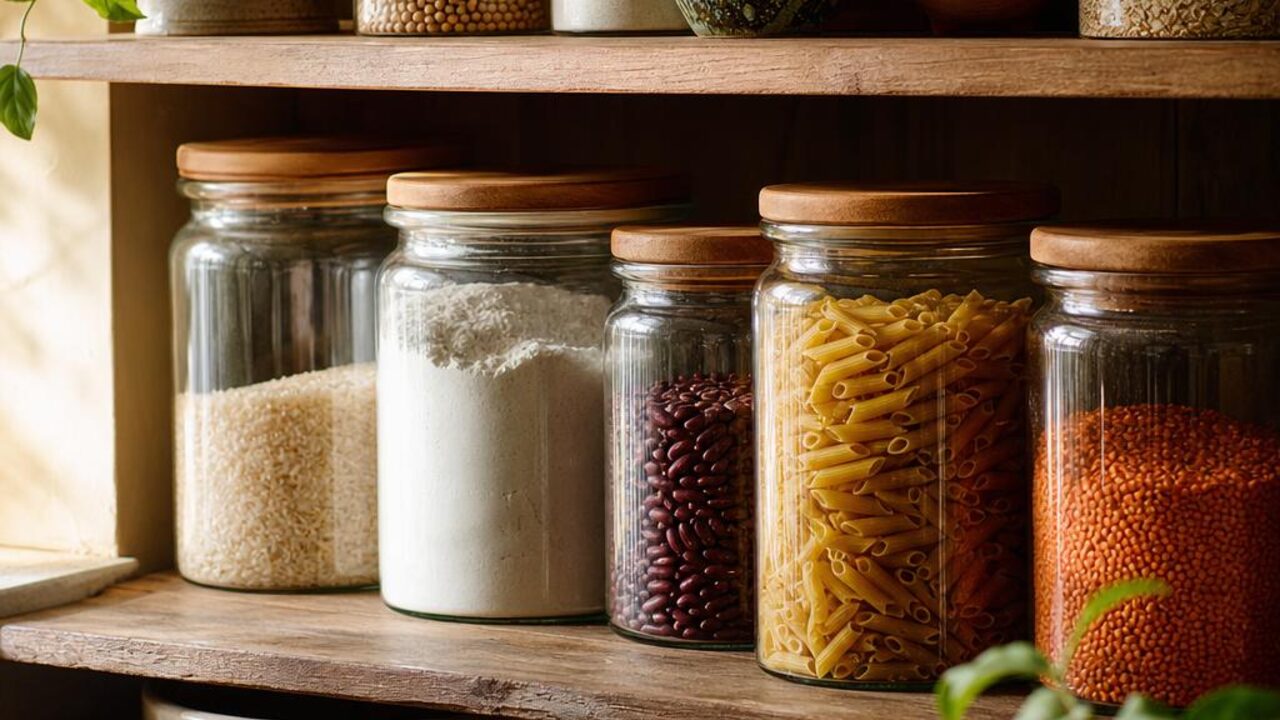
A pantry basics list is most useful when it describes what your household actually uses. A generic checklist can fill a cupboard with ingredients that do not fit your meals, storage, or preferences. Start with your repeat dishes, record practical quantities, and review the list often enough to keep it honest.
The goal is not to keep every possible staple. It is to make the next shop easier and prevent the small surprises that derail a meal.
Group staples by how you use them
Begin with meals you cook regularly and list the ingredients that support them. Then group the staples by their role rather than by an ideal pantry:
- Bases such as grains, pasta, bread, or tortillas
- Proteins and flexible shelf-stable options
- Cooking helpers such as oil, stock, and seasonings
- Breakfast and snack basics
- Household-specific items for dietary or cultural preferences
This keeps the list connected to real meals. It also makes it easier to see when two items serve the same purpose.
Set a household quantity, not a universal quantity
The right amount depends on how many people you feed, how often you cook, your storage, and how quickly an item is used. Record a working range such as “one open and one backup” or “enough for two planned meals,” then adjust from experience.
Do not buy a large package just because it seems cheaper if it is likely to sit unused. A smaller quantity that gets used is the more reliable staple.
A pantry basic earns its place by being used, not by looking prepared on a shelf.
Add substitutions beside the item
Substitutions prevent a missing ingredient from turning into an unnecessary trip. For each frequently used staple, note one or two alternatives that work in the meals you actually cook. Keep the note practical rather than exhaustive.
For example, a grain can have another grain as an alternative, while a sauce ingredient may have a pantry version or a meal that does not need it. The purpose is to preserve flexibility, not to promise that every recipe is interchangeable.
The smarter pantry guide can help you connect the staple list to expiry dates and low-stock checks.
Use reorder points as a prompt
Choose the point at which an item should appear on the next grocery list. That might be when the last backup is opened, when there is enough for one meal, or when the item reaches zero. Keep the rule consistent enough that another household member can understand it.
For items with different buying rhythms, the household supply reorder points approach is a helpful comparison, even though food has its own freshness considerations.
Review the list after shopping and cooking
Once a month, remove staples that have not moved and add items that repeatedly appear as last-minute purchases. Update quantities when the household changes. Keep the current list in the Lucru Home grocery list, where it can be checked against planned meals and actual pantry stock.
A maintainable pantry list is a living set of reminders. Keep it personal, allow substitutions, and let your own cooking pattern decide what belongs there.